Electric cars and SUVs in the U.S. currently struggle with very poor value retention and depreciation rates. This contributes to them being very poor new car prospects for short-term buyers but great used buy options for consumers that are happy to
dip into the preowned car market
.
Thanks to their
staggering depreciation rates
, you can enjoy some considerable deals on used EVs that are pretty much mechanically identical to the new alternatives currently taking up space on dealership floors across the U.S.
In order to give you the most up-to-date and accurate information possible, the data used to compile this article was sourced from various manufacturer websites and other authoritative sources, including the EPA, Consumer Reports, and J.D. Power. We’ve ranked the models below based on their average retail price, from highest to lowest.

Related
2024 BMW i4: Prices And Trims Detailed
The 2024 BMW i4 is an electric car designed to optimize performance and efficiency. A sweet suite of features makes the BMW i4 a true contender.
10
2023 BMW i4
Average Retail Price: $29,600 – $43,525
The 2023 BMW i4 range currently sells for between $29,600 and $43,525, according to Consumer Reports, who also gives it a 94/100 reliability and 4/5 owner satisfaction score. The very same model gets a 78/100 overall score from J.D. Power, which includes 74/100 for quality and reliability and 86/100 for the driving experience. The i4 sits on BMW’s CLAR platform and is still available as a new vehicle option today. The inaugural 2023 model is pretty much unchanged from the 2025 variant, minus some discrepancies in the specifications.
Performance Specifications
|
eDrive35 |
eDrive40 |
xDrive40 |
M50 xDrive |
|
|
Price |
$53,975 |
$57,900 |
$62,300 |
$70,700 |
|
Powertrain |
Single-electrically excited synchronous motor |
Single-electrically excited synchronous motor |
Dual-electrically excited synchronous motor |
Dual-electrically excited synchronous motor |
|
Horsepower |
282 HP |
335 HP |
396 HP |
536 HP |
|
Torque |
295 LB-FT |
317 LB-FT |
443 LB-FT |
586 LB-FT |
|
Transmission |
Single-Speed Automatic |
Single-Speed Automatic |
Single-Speed Automatic |
Single-Speed Automatic |
|
Driveline |
Rear-Wheel Drive |
Rear-Wheel Drive |
All-Wheel Drive |
All-Wheel Drive |
|
Battery |
66 kWh Net |
81.5 kWh Net |
81.5 kWh Net |
81.5 kWh Net |
|
Range |
252-276 Miles |
283-301 Miles |
279-307 Miles |
227-269 Miles |
|
Fuel Economy |
29-32 kWh/100 miles |
30-32 kWh/100 miles |
33-36 kWh/100 miles |
36-42 kWh/100 miles |
|
0-60 MPH |
5.8 Seconds |
5.4 Seconds |
4.9 Seconds |
3.5 Seconds |
|
Top Speed |
118 MPH |
118 MPH |
124 MPH |
140 MPH |
The
entry-level BMW i4 eDrive35
offers modest performance capabilities with its single rear-mounted electric motor, producing 282 horsepower and 295 pound-feet. The result is a claimed 5.8-second 0-60 MPH time and 118-MPH top speed. The eDrive40 takes the same motor and increases power to 335 horsepower and 317 pound-feet, resulting in a claimed 5.4-second 0-60 MPH time and unchanged top speed.
The xDrive trim adds a motor to the front axle, increasing power to 396 horsepower and 443 pound-feet. BMW claims a 0-60 MPH time of 4.9 seconds. Top speed also increases to 124 MPH.
The M50 xDrive increases output to 556 horsepower and 586 pound-feet. BMW claims that you can hit 0-60 MPH in 3.5 seconds with the Sport Boost function. Top speed is limited to 140 MPH.
Pros
- Good braking performance
- Driver-engaging suspension
- Comfortable front seats
Cons
- Confusing controls
- Limited rear-seat space
- A more expensive EV option
9
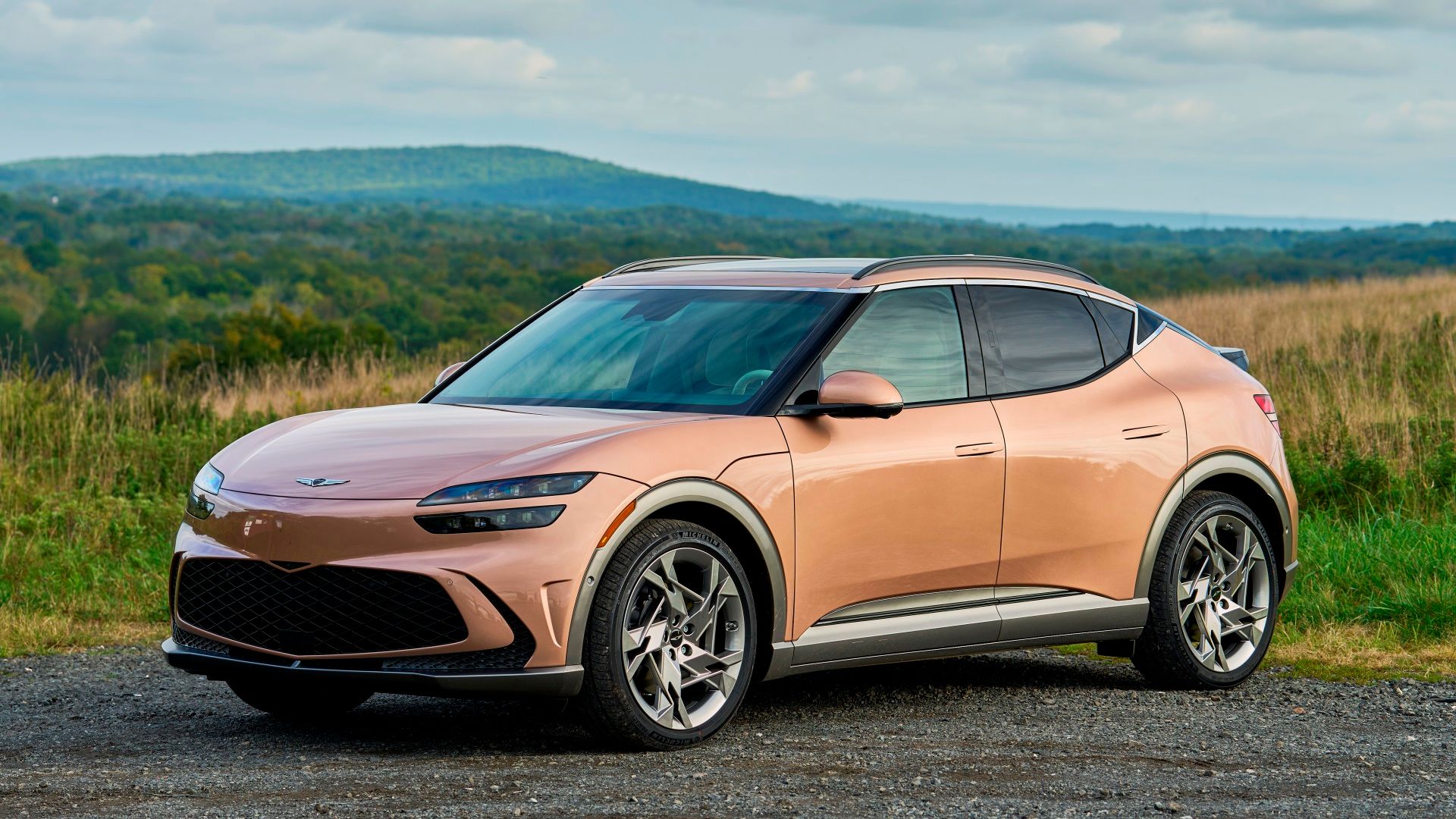
2024 Genesis GV60
Average Retail Price: $28,125 – $41,200
According to Consumer Reports, the 2024 Genesis GV60 currently sells for anywhere between $28,125 and $41,200, which is just over half of what you’ll spend on a brand-new 2025 model year. The publication only gives this a 2/5 score for owner satisfaction, but the current model year, which is largely unchanged, benefits from a 74/100 overall score, including 86/100 for the road test, 47/100 for predicted reliability, and 3/5 for the predicted owner satisfaction. J.D. Power gives the 2024 model year a 75/100 overall score, which includes 74/100 for quality and reliability and 92/100 for the driving experience.
Performance Specifications
|
|
Standard RWD |
Advanced AWD |
Performance AWD |
|
Price |
$52,000 |
$60,550 |
$69,550 |
|
Powertrain |
Single permanent-magnet motor |
Dual permanent-magnet motors |
Dual permanent-magnet motors |
|
Transmission |
Single-Speed Direct Drive Automatic |
Single-Speed Direct Drive Automatic |
Single-Speed Direct Drive Automatic |
|
Horsepower |
225 HP |
314 HP |
483 HP |
|
Torque |
258 LB-FT |
446 LB-FT |
516 LB-FT |
|
Driveline |
Rear-Wheel Drive |
All-Wheel Drive |
All-Wheel Drive |
|
Battery |
74 kWh Net |
74 kWh Net |
74 kWh Net |
|
Range |
294 Miles |
248-264 Miles |
235 Miles |
|
Fast Charging Time |
18 Minutes |
18 Minutes |
18 Minutes |
|
Energy Consumption |
30 kWh/100 Miles |
34 kWh/100 Miles |
35 kWh/100 Miles |
|
0-60 MPH |
7.5 Seconds |
5.4 Seconds |
4.0 Seconds |
|
Top Speed |
115 MPH |
124 MPH |
146 MPH |
|
Towing Capacity |
2,000 Pounds |
2,000 Pounds |
2,000 Pounds |
The range starts with the rear-wheel drive model, featuring a single permanent-magnet motor on the rear axle, which affords it 225 horsepower and 258 pound-feet. This gets it from 0-60 MPH in 7.5 seconds, but you benefit from an impressive 30 kWh per 100 miles consumption estimate and 294-mile range claim. The flagship Performance option features two permanent-magnet motors that produce 483 horsepower and 516 pound-feet, which gets you from 0-60 MPH in 4.0 seconds before hitting a limited 146 MPH top speed. This increases the energy consumption estimate to 35 kWh per 100 miles and cuts the range down to 235 miles.
Pros
- Plush ride
- Sharp handling
- Good interior insulation
Cons
- Limited exterior visibility
- Awkward rear styling
- Just an expensive E-GMP EV
8
2024 Chevrolet Blazer EV
Average Retail Price: $27,325 – $31,925
The 2024 Chevrolet Blazer EV is available for as little as $27,325 on the used market, which is an incredible deal when you compare it to its $48,880 starting price. Unfortunately, it doesn’t benefit from the best reliability rating, with Consumer Reports handing it 5/100. It does get a more preferable 4/5 owner satisfaction grade.
Performance Specifications
|
LT/RS |
RS Rear-Wheel Drive |
SS |
|
|
Price |
$48,880 |
$54,200 |
TBA |
|
Powertrain |
Dual Permanent-Magnet Motors |
Single Permanent-Magnet Motor |
Dual Permanent-Magnet Motor |
|
Transmission |
Single-Speed Automatic |
Single-Speed Automatic |
Single-Speed Automatic |
|
Horsepower |
288 HP |
340 HP |
557 HP |
|
Torque |
333 LB-FT |
325 LB-FT |
648 LB-FT |
|
Driveline |
All-Wheel Drive |
Rear-Wheel Drive |
All-Wheel Drive |
|
Battery |
85 kWh |
102 kWh |
102 kWh |
|
Range |
279 Miles |
324 Miles |
324 Miles |
|
Fast Charging Time |
28 Minutes |
33 Minutes |
33 Minutes |
|
Energy Consumption |
35 kWh/100 Miles |
37 kWh/100 Miles |
TBA |
|
0-60 MPH |
6.9 Seconds |
6.0 Seconds |
4.0 Seconds |
|
Top Speed |
118 MMPH |
118 MPH |
130 MPH |
|
Towing Capacity |
1,500 Pounds |
3,500 Pounds |
TBA |
The
Chevrolet Blazer EV
sits on GM’s Ultium platform. It’s currently available in LT and RS derivatives. These feature a pair of permanent-magnet motors that generate 288 horsepower to all four wheels, which gets you from 0-60 MPH in 6.9 seconds. The RS is available with a rear-wheel drive system, which interestingly benefits from an increased 340-horsepower output, which you can use to get from 0-60 MPH in 6.0 seconds.
Pros
- Smooth off the line
- Fast charging abilities
- Appealing tax incentives
Cons
- Unresponsive steering
- Stiff suspension
- Poor braking abilities

Related
2025 Ford Mustang Mach-E Orders Open At Lower Price
Ford has made a number of changes to the Mach-E for 2025.
7
2024 Ford Mustang Mach-E
Average Retail Price: $25,275 – $36,475
The 2024 Ford Mustang Mach-E range currently sells for anywhere between $25,275 and $36,475, which is a competitive rate considering it benefits from the brand’s recent set of updates. According to the 2025 model year’s scores, Consumer Reports awards it a 68/100 overall score, which includes 74/100 for the road test, 43/100 for predicted reliability, and 4/5 for predicted owner satisfaction. J.D. Power hands the same model a 75/100 overall score, consisting of 69/100 for quality and reliability and 88/100 for the driving experience.
Performance Specifications
|
Rear-Wheel Drive |
Rear-Wheel Drive Extended |
All-Wheel Drive |
All-Wheel Drive Extended |
GT |
GT Performance Upgrade/Rally |
|
|
Price |
$39,995 |
$48,990 |
$46,185 |
$49,990 |
$54,995 |
$58,995 |
|
Powertrain |
Single Permanent-Magnet Motor |
Single Permanent-Magnet Motor |
Dual Permanent-Magnet Motors |
Dual Permanent-Magnet Motors |
Dual Permanent-Magnet Motors |
Dual Permanent-Magnet Motors |
|
Transmission |
Single-Speed Automatic |
Single-Speed Automatic |
Single-Speed Automatic |
Single-Speed Automatic |
Single-Speed Automatic |
Single-Speed Automatic |
|
Horsepower |
266 HP |
290 HP |
325 HP |
365 HP |
480 HP |
480 HP |
|
Torque |
387 LB-FT |
387 LB-FT |
500 LB-FT |
500 LB-FT |
600 LB-FT |
700 LB-FT |
|
Driveline |
Rear-Wheel Drive |
Rear-Wheel Drive |
All-Wheel Drive |
All-Wheel Drive |
All-Wheel Drive |
All-Wheel Drive |
|
Battery |
72 kWh Net |
91 kWh Net |
72 kWh Net |
91 kWh Net |
91 kWh Net |
91 kWh Net |
|
Range |
250 Miles |
320 Miles |
230 Miles |
300 Miles |
280 Miles |
265 Miles |
|
Fast Charging Time |
27 Minutes |
32 Minutes |
27 Minutes |
32 Minutes |
32 Minutes |
32 Minutes |
|
Energy Consumption |
33 kWh/100 Miles |
32 kWh/100 Miles |
37 kWh/100 Miles |
34 kWh/100 Miles |
37 kWh/100 Miles |
39 kWh/100 Miles |
|
0-60 MPH |
5.8 Seconds |
6.3 Seconds |
5.2 Seconds |
4.1 Seconds |
3.8 Seconds |
3.3-3.4 Seconds |
|
Top Speed |
112 MPH |
124 MPH |
112 MPH |
124 MPH |
120 MPH |
124 MPH |
The base rear-wheel-drive model features a single permanent-magnet motor located on the rear axle, with 266 horsepower and 387 pound-feet output. This achieves a 5.8-second 0-60 MPH time and 112 MPH top speed. Adding the extended battery pack increases power to 290 horsepower, but the added weight increases the acceleration time to 6.3 seconds. Thankfully, you benefit from a slightly higher 124 MPH top speed.
The dual-motor configuration with the standard battery pack increases the output to 325 horsepower and 500 pound-feet, which gets you from 0-60 MPH in 5.2 seconds with a 112 MPH top speed. Adding the extended battery pack results in a 365 horsepower and 500 pound-feet output, resulting in a 4.1-second 0-60 MPH time and 124 MPH top speed. The GT is the performance-oriented model, benefitting from a 480 horsepower and 600 pound-feet state-of-tune, 3.8-second 0-60 MPH time, and 120 MPH top speed. Upgrading to the Rally or GT Performance package increases torque to 700 pound-feet, which reduces the 0-60 MPH time to 3.3 seconds wit ha 124 MPH top speed.
Pros
- Great performance characteristics
- Good handling abilities
- Silent interior
Cons
- Annoying door handles
- Confusing controls
- Overbearing touchscreen
6
2024 Hyundai Ioniq 5
Average Retail Price: $24,775 – $39,400
A one-year-old Hyundai Ioniq 5 currently sells for between $24,775 and $39,400, but this is if we exclude the performance-oriented N. This model year gets a 55/100 reliability and 4.5 owner satisfaction score from Consumer Reports. It also gets a 73/100 overall score from J.D. Power, which also includes 70/100 for quality and reliability and 82/100 for the driving experience.
Performance Specifications
|
Rear-Wheel Drive Standard Range |
Rear-Wheel Drive Extended Range |
All-Wheel Drive Extended Range |
Ioniq 5 N |
|
|
Price |
$41,800 |
$45,850 |
$49,350 |
$66,100 |
|
Powertrain |
Single Permanent-Magnet Motor |
Single Permanent-Magnet Motor |
Dual Permanent-Magnet Motors |
Dual Permanent-Magnet Motors |
|
Transmission |
Single-Speed Automatic |
Single-Speed Automatic |
Single-Speed Automatic |
Single-Speed Automatic |
|
Horsepower |
168 HP |
225 HP |
320 HP |
601 HP (641 HP w/N Grin Boost) |
|
Torque |
258 LB-FT |
258 LB-FT |
446 LB-FT |
545 LB-FT (568 LB-FT w/ N Grin Boost) |
|
Driveline |
Rear-Wheel Drive |
Rear-Wheel Drive |
All-Wheel Drive |
All-Wheel Drive |
|
Battery |
58 kWh Net |
77.4 kWh Net |
77.4 kWh Net |
84 kWh |
|
Range |
220 Miles |
303 Miles |
260 Miles |
221 Miles |
|
Fast Charging Time |
18 Minutes |
18 Minutes |
18 Minutes |
18 Minutes |
|
Energy Consumption |
29 kWh/100 Miles |
30 kWh/100 Miles |
34 kWh/100 Miles |
47 kWh/100 Miles |
|
0-60 MPH |
N/A |
7.4 Seconds |
4.4 Seconds |
3.25 Seconds |
|
Top Speed |
115 MPH |
117 MPH |
117 MPH |
162 MPH |
|
Towing Capacity |
N/A |
2,300 Pounds |
2,300 Pounds |
N/A |
Hyundai offers the Ioniq 5 in a plethora of trims and configurations, starting with the base SE rear-wheel drive derivative . This features the brand’s single permanent-magnet synchronous motor mounted to the rear axle, together with a small 58 kWh lithium-ion battery pack, affording it a 220-mile EPA estimated range on a full charge and a 29 kWh per 100 miles energy consumption rate.
The base derivative only produces 168 horsepower and 258 pound-feet of torque, which is enough to get it to a maximum 115 MPH top speed. Hyundai doesn’t claim a 0-60 MPH time for this model. The Extended Range battery pack increases the model’s capacity to 77.4 kWh and increases the output to 225 horsepower and 258 pound-feet.
With this configuration, you can expect to cover 303 miles on a single charge, but suffer from a slightly worse 30 kWh per 100 miles combined energy consumption estimate. You do benefit from a higher 117 MPH top speed, 4.7-second 0-60 MPH time, and a 2,300-pound towing capacity.
Upgrading to the dual-motor configuration increases the model’s output to 320 horsepower and 446 pound-feet, which improves the 0-60 MPH time to 4.4 seconds. You will have to accommodate a 260-mile range estimate and 34 kWh per 100 miles energy consumption estimate, but the towing capacity remains the same.
Pros
- Impressive acceleration
- Silent interior
- Sharp handling
Cons
- Some reliability concerns
- A bit pricier than some rivals
- Real-world range needs improvement
5
2024 Hyundai Ioniq 6
Average Retail Price: $22,425 – $35,225
The Hyundai Ioniq 6‘s previous model year currently sells for $22,425 to $35,225, which reflects a relatively impressive value retention compared to the other EVs on this list. Consumer Reports hands it a 44/100 score for reliability and 4/5 for owner satisfaction, while J.D. Power gives the same model year a 76/100 overall quality and reliability score, together with an 81/100 driving experience grade.
Performance Specifications
|
SE Standard Range |
SE |
Dual-Motor |
|
|
Price |
$37,750 |
$42,700 |
$46,200 |
|
Powertrain |
Single Permanent-Magnet Motor |
Single Permanent-Magnet Motor |
Dual Permanent-Magnet Motors |
|
Transmission |
Single-Speed Automatic |
Single-Speed Automatic |
Single-Speed Automatic |
|
Horsepower |
149 HP |
225 HP |
320 HP |
|
Torque |
258 LB-FT |
258 LB-FT |
446 LB-FT |
|
Driveline |
Rear-Wheel Drive |
Rear-Wheel Drive |
All-Wheel Drive |
|
Battery |
53 kWh Net |
77.4 kWh Net |
77.4 kWh Net |
|
Range |
240 Miles |
342 Miles |
270-316 Miles |
|
Fast Charging Time |
18 Minutes |
18 Minutes |
18 Minutes |
|
Energy Consumption |
25 kWh/100 Miles |
26 kWh/100 Miles |
28-33 kWh/100 Miles |
|
0-60 MPH |
8.5 Seconds |
6.2 Seconds |
4.9 Seconds |
|
Top Speed |
115 MPH |
115 MPH |
115 MPH |
The rear-wheel drive model is another configuration that focuses on efficiency. The
SEL trim in particular
is the more attractive trim as it returns 140 MPGe or 24 kWh per 100 miles. It also manages to squeeze an impressive 361 miles of range from the 77.4 kWh battery pack. Performance-wise, the single rear-wheel drive motor produces 225 horsepower, which gets you from 0-60 MPH in just 6.2 seconds with a 115 MPH top speed.
If you upgrade to the dual-motor configuration, you get to enjoy a 320-horsepower and 446-pound-feet combined output, which gets you from 0-60 MPH in 4.9 seconds with a 115 MPH top speed. The base SE derivative only produces 149 horsepower, together with a 53 kWh battery pack, which is enough to cover 240 miles on a single charge.
Pros
- Great acceleration
- Responsive suspension
- Good fast-charging speeds
Cons
- Poorly placed controls
- Compact cargo space
- TIght rear bench

Related
2024 Kia EV6 Interior And Exterior Picture Gallery
The 2024 Kia EV6 is a sleek, high-performance electric crossover that offers futuristic design, advanced technology, and exceptional driving dynamics.
4
2024 Kia EV6
Average Retail Price: $22,225 – $34,800
You can pick up a lightly used 2024 Kia EV6 for anywhere between $22,225 and $34,800, depending on the specification, condition, and mileage. This is a really sweet deal considering the new and updated 2025 range sells for almost double the amount. Consumer Reports issues the model with a 36/100 reliability score and 3/5 owner satisfaction rating, while J.D. Power hands it a 78/100 overall score, alongside a 76/100 quality and reliability and 89/100 driving experience grade.
Performance Specifications
|
Light Rear-Wheel Drive |
Long-Range Rear-Wheel Drive |
Long-Range All-Wheel Drive |
GT |
|
|
Price |
$42,600 |
$45,950 |
$49,850 |
$61,600 |
|
Powertrain |
Single Permanent-Magnet Motor |
Single Permanent-Magnet Motor |
Dual Permanent-Magnet Motors |
Dual Permanent-Magnet Motors |
|
Transmission |
Single-Speed Automatic |
Single-Speed Automatic |
Single-Speed Automatic |
Single-Speed Automatic |
|
Horsepower |
167 HP |
225 HP |
320 HP |
576 HP |
|
Torque |
258 LB-FT |
258 LB-FT |
446 LB-FT |
546 LB-FT |
|
Driveline |
Rear-Wheel Drive |
All-Wheel Drive |
Rear-Wheel Drive |
All-Wheel Drive |
|
Battery |
58 kWh Net |
77.4 kWh Net |
77.4 kWh Net |
77.4 kWh Net |
|
Range |
232 Miles |
310 Miles |
282 Miles |
218 Miles |
|
Fast Charging Time |
18 Minutes |
18 Minutes |
18 Minutes |
18 Minutes |
|
Energy Consumption |
28 kWh/100 Miles |
28 kWh/100 Miles |
31 kWh/100 Miles |
39 kWh/100 Miles |
|
0-60 MPH |
8.0 Seconds |
7.2 Seconds |
5.1 Seconds |
3.4 Seconds |
|
Top Speed |
115 MPH |
115 MPH |
115 MPH |
162 MPH |
|
Towing Capacity |
N/A |
2,300 Pounds |
2,300 Pounds |
2,300 Pounds |
The
entry-level Kia EV6 Light
isn’t a very exciting electric car, as its single electric motor and smaller battery pack only result in a 167 horsepower output, which is enough to get you from 0-60 MPH in 6.7 seconds. The long range battery pack increases this output to 225 horsepower, which improves the 0-60 MPH time to just 6.5 seconds. Equipping the 320-horsepower dual-motor configuration yields impressive performance improvements with its 5.1-second claimed 0-60 MPH time.
The flagship GT is a fully-fledged performance EV. The dual motors generate 576 horsepower, resulting in a 3.4-second 0-60 MPH time. This has a heavily negative impact on its range, as the 77.4 kWh battery pack is only able to cover it for 218 miles before you need to recharge it again. The rear-wheel drive Light Long Range yields the best range and efficiency results, with a 310-mile range and 117 MPGe or 28 kWh per 100 miles.
Pros
- Fast acceleration
- Silent interior
- Sharp braking
Cons
- Limited outward visibility
- Awkward door handles
- Real-world range could be better
3
2023 Kia Niro EV
Average Retail Price: $21,575 – $28,025
According to Consumer Reports’ valuation, you can pick up a lightly used 2023 Kia Niro Electric for as little as $21,575 to $28,025. This is the current generation model, so it is pretty much mechanically identical to the one that the South Korean brand is selling today. This generation enjoys a 35/100 reliability rating from the publication, together with a 3/5 owner satisfaction score. J.D. Power groups the entire Niro range together, resulting in a 79/100 overall score, including a 76/100 quality and reliability grade and an 82/100 driving experience score.
Performance Specifications
|
Powertrain |
Single Permanent-Magnet Motor |
|
Horsepower |
201 HP |
|
Torque |
291 LB-FT |
|
Transmission |
Single-Speed Automatic |
|
Driveline |
Front-Wheel Drive |
|
Battery |
64.8 kWh |
|
Range |
239 Miles |
|
Fuel Economy |
30 kWh/100 Miles |
|
0-62 MPH |
7.8 Seconds |
|
Top Speed |
104 MPH |
The Niro EV is a low-power EV featuring a single electric motor that generates 201 horsepower. This gets you from 0-60 MPH in 7.1 seconds. For an SUV at this entry-level price point, the Kia Niro EV comes across as a modern and simple option. The interior features plenty of comfort, storage facilities, and technological innovations.
Pros
- Smooth drivetrain
- Practical hatchback
- Impressive range for the price
Cons
- Limited rear visibility
- Confusing infotainment system
- Slow charging times
2
2024 Hyundai Kona Electric
Average Retail Price: $20,525 – $26,675
A one-year-old new-generation Hyundai Kona Electric only sells for as little as $20,525 to $26,675, depending on your specification, mileage, and condition. Consumer Reports issues the model with a 4/5 owner satisfaction rating, but the current model year gets a 68/100 overall score, which includes 73/100 for the road test and 50/100 for predicted reliability. J.D. Power groups the entire Kona range, resulting in an 83/100 overall score, an 86/100 quality and reliability score, and an 88/100 driving experience score.
Performance Specifications
|
Powertrain |
Single Permanent-Magnet Motor |
|
Horsepower |
133 HP |
|
Torque |
188 LB-FT |
|
Transmission |
Single-Speed Automatic |
|
Battery |
47 kWh Net |
|
Range |
200 Miles |
|
Fuel Economy |
29 kWh/100 Miles |
|
0-60 MPH |
6.8 Seconds |
|
Top Speed |
107 MPH |
The
Hyundai Kona Electric SE
prioritizes efficiency with its single permanent-magnet-synchronous electric motor fitted to the front axle. This only generates 133 horsepower and 188 pound-feet, resulting in a 6.8-second 0-60 MPH time and 107 MPH top speed. The EPA estimates that this will return 29 kWh per 100 miles on the combined cycle, while the 47 kWh battery pack gets you 200 miles of range on a single charge. The higher Kona trims match the aforementioned Niro’s performance and efficiency capabilities, as they are essentially the same vehicle.
Pros
- Quick and silent
- Good brakes
- Controls are easy to navigate
Cons
- Interior feels cheap
- Limited range
- Poor interior insulation

Related
The New Chevrolet Bolt To Arrive By 2026 As A Crucial Player In GM’s EV Family
The next-gen Bolt will be sold strictly as a compact crossover electric utility vehicle.
1
2023 Chevrolet Bolt EV And EUV
Average Retail Price: $17,900 – $19,025
The Chevrolet Bolt EV and EUV hatch and crossover duo are among the cheapest used electric vehicles that you can consider today that will still feel on par with whatever you’d drive in the new vehicle market. These sell for anywhere between $17,900 and $19,025, making them exceptional value. Consumer Reports issues the final model year with a 51/100 reliability score and 4/5 owner satisfaction rating. J.D. Power gives the very same model an 80/100 overall score, which also includes 77/100 for the quality and reliability and 71/100 for the driving experience.
Performance Specifications
|
Powertrain |
Single Permanent-Magnet Motor |
|
Horsepower |
200 HP |
|
Torque |
266 LB-FT |
|
Transmission |
Single-Speed Automatic |
|
Battery |
Front-Wheel Drive |
|
Range |
259 Miles |
|
Fuel Economy |
29 kWh/100 Miles |
|
0-60 MPH |
6.5 Seconds |
|
Top Speed |
93 MPH |
The Chevrolet Bolt EV and EUV both feature a single permanent-magnet motor mounted to the front axle, developing 200 horsepower and 266 pound-feet. This system gets you from 0-60 MPH in a claimed 6.5 seconds, with a limited 93 MPH top speed figure. It’s not the most thrilling electric car option you can purchase, but it reflects an appropriate and enjoyable balance of speed and efficiency
The Chevrolet Bolt EV and EUV range was one of the most economical models before the brand laid it to rest. All cars feature a 65 kWh battery pack, affording the EV a 259-mile range, and the EUV a 247-mile range estimate. The Bolt EV returns a 120 MPGe or 28 kWh per 100 miles combined energy consumption estimate, while the EUV is slightly heavier on energy, with its 115 MPGe or 29 kWh per 100 miles returns.
Pros
- Good range estimates
- Rapid off the line
- Silent interior
Cons
- Takes a long time to recharge
- Awkward brake pedal
- Rigid ride