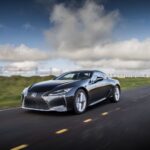
Our first official look at the highly anticipated Volvo ES90 has finally arrived, and in true Swedish fashion, it appears to be the perfect blend of futuristic design with a contemporary and minimalist approach. The ES90 is the official EV equivalent of the midsize S90 sedan, similar to how the
EX90 reflects the XC90 range
. The fact that Volvo shows a strong dedication to the sedan segment is a reassurance to a lot of loyal fans, especially when you consider how many other manufacturers have completely phased their sedan line-up out, in favor of higher-riding crossovers and SUVs.
Midsize and full-size EV sedans are not the most popular options in the new electric vehicle market, except for the
Tesla Model 3
, so it’s going to be very interesting to see just how this new Scandinavian rival approaches the already competitive U.S. market when it arrives in the coming months. Volvo’s EV catalog hasn’t experienced much success in the highly competitive region, but the ES90 is most certainly likely to enhance the struggling Swedish brand’s overall appeal.
In order to give you the most up-to-date and accurate information possible, the data used to compile this article was sourced from Volvo’s websites and other authoritative sources, including Cox Automotive.

Related
The 2026 Volvo ES90 Is Scandinavia’s Sexy Response To The Tesla Model S
Volvo’s first-ever electric luxury sedan can fast-charge at the rate of 186 miles in only 10 minutes.
Volvo’s Stellar Entry Into The Mid-Size EV Sedan Segment
The Volvo ES90 is an intriguing mix of fastback, SUV, and sedan designs, similar to the
Toyota Crown
, but it ultimately falls under the midsize sedan segment. This is despite Volvo’s marketing literature insisting that it is in a class of its own. From the profile angle, it’s clearly evident that the newcomer sits higher off the ground and benefits from a spacious interior, which could potentially make it an ideal daily driver for long trips and daily commutes.
Volvo adds that the ES90 is built to be adaptable for future technologies, thanks to a collection of next-generation core computers that are eight times more powerful than the previous system. This advanced computing allows for continuous software updates, keeping the car’s technology current over time. It is also Volvo’s first model with 800-volt technology, which improves charging speeds and extends driving range, making it the most efficient electric Volvo according to the WLTP’s testing.
Being a Volvo, the ES90 also enjoys a comprehensive level of standard active and passive safety features, as well as advanced driver assistance systems. This will be a direct counterpart to the
EX90 SUV
, as the two stand together as the brand’s flagship models that reinforce Volvo’s focus on software-driven vehicles. CEO Jim Rowan describes it as a premium electric car that enhances comfort and driving experience while embracing cutting-edge technology.

Related
This Is The Most Powerful Car Volvo Has Ever Created… Kind Of
The new, all-electric Volvo ES90 will be unveiled on March 15, and is set to rival Audi’s A6 e-tron and BMW’s i5.
Three Effective Drivetrain Options

Volvo will launch the ES90 in the U.S. with a collection of three drivetrain options to choose from, starting with the base Rear-Wheel-Drive Single Motor derivative, producing 329 horsepower and 354 pound-feet. This will get you from 0-60 MPH in 6.7 seconds and reach a limited 112 MPH top speed. Volvo fits this with a smaller 88 kWh lithium-ion battery pack, which the WLTP estimates will cover 404 miles on a single charge. The WLTP’s testing results in far more generous range figures, so you can expect the EPA’s results to translate into shorter range figures when its results are announced for the U.S. market.
2026 Volvo ES90 Technical Specifications
| Single Motor | Twin Motor | Twin Motor Performance | |
| Battery Capacity | 88 kWh Net | 102 kWh Net | 102 kWh Net |
| Electric Motor Type | Single Permanent-Magnet-Synchronous Motor | Dual Permanent-Magnet-Synchronous Motors | Dual Permanent-Magnet-Synchronous Motors |
| Driveline | Rear-Wheel-Drive | All-Wheel-Drive | All-Wheel-Drive |
| Horsepower | 329 HP | 442 HP | 670 HP |
| Torque | 354 LB-FT | 494 LB-FT | 635 LB-FT |
| DC Fast-Charging Rate | 300 kW | 350 kW | 350 kW |
| Range (WLTP) | 650 km (404 Miles) | 700 km (435 Miles) | 700 km (435 Miles) |
| 0 to 60 MPH | 6.7 Seconds | 5.3 Seconds | 3.9 Seconds |
| Top Speed | 112 MPH | 112 MPH | 112 MPH |
Upgrading to the Twin Motor configuration adds a second permanent-magnet-synchronous motor to the front axle, increasing the combined power output to 442 horsepower and 494 pound-feet. This will get you from 0-60 MPH in a claimed 5.3 seconds with no changes to the 112 MPH top speed limit. This is pretty much identical to the
Polestar 2 Dual-Motor Performance
‘s numbers. The larger 102 kWh lithium-ion battery pack increases its WLTP-estimated range figure to 435 miles. Upgrading to the flagship Performance derivative increases outputs to 670 horsepower and 635 pound-feet, resulting in a 3.9-second 0-60 MPH acceleration time. Interestingly, the increased power doesn’t affect this model’s range estimations.

Related
Volvo Launching Five Models In 2025, EX60 In 2026
Huge things are happening at this upscale Swedish automaker.
Redefining Contemporary Interior Design
The Volvo ES90’s obscure exterior design and 122-inch wheelbase, results in an impressive rear legroom figure, although the official dimensions are yet to be published. The cabin also features six ambient light themes and multiple upholstery options, translating a diverse possibility for customizations and personal specifications. The optional glass panoramic roof benefits from 99.9 percent UV protection, but there’s also an electrochromic version that allows you to adjust transparency to reduce glare and increase privacy. The four-zone climate system is standard across all trims and features an advanced air purifier that blocks up to 95 percent of PM2.5 particulates and removes 99.9 percent of common allergens. Volvo also confirms that it has designed the cabin for low noise levels so that you can enjoy a silent driving experience.
You can choose from three different sound system options, with the Bowers and Wilkins systems being the flagship option. This features 25 high-fidelity speakers located across the cabin, inducing the headrest and ceiling. Dolby Atmos spatial audio and an Abbey Road Studio mode further elevate the in-car entertainment experience. Volvo equips the ES90 with a Google-based infotainment system, including Google Maps, Google Assistant, and access to apps via Google Play. It operates on Qualcomm’s Snapdragon Cockpit Platform, supporting 5G connectivity and a responsive interface. The system provides driving information through a 9.0-inch driver display and a heads-up display. A
14.5-inch center screen
controls navigation, climate, entertainment, and phone functions. A 3D parking view with a 360-degree camera assists in tight spaces.
Volvo’s Next-Generation Safety Suite
- The ES90 meets Volvo’s strict safety standards, which exceed official testing requirements and are based on 55 years of real-world safety research.
- The ES90 features advanced core computers to enhance safety designed for real-world scenarios, continuing the approach introduced with the EX90.
- The shell consists of a strong safety cage, advanced restraint systems, and optimized deformation zones to protect occupants in a collision.
- The ES90 comes standard with five radars, seven cameras, twelve ultrasonic sensors, and a Luminar lidar to detect hazards beyond human vision.
- A driver-understanding system monitors attention levels and can intervene if the driver becomes distracted.
- Safe Space Technology includes a door-opening alert to protect pedestrians and cyclists, as well as full-cabin occupant sensing to detect even small movements, such as a baby’s breathing.

Related
Volvo Is Doing Very Well In The EV Space
The EX30, an electric crossover still not available in the U.S., is leading the way.
How The ES90 Impacts The Current EV Sedan Landscape
Looking at 2024’s EV sales in the U.S. alone, it’s clear that premium midsize and full-size electric sedans are not in high demand at the moment. The Tesla Model 3 is the undisputed king, having sold an impressive 189,903 individual copies throughout the year, but this still reflects a 17.4 percent decline over 2023’s result. The next best-selling rival is the
BMW i4
, which only managed to secure 23,403 individual sales throughout the year. More premium alternatives, like the
Tesla Model S
and
Lucid Air
barely scraped past the 13,000 annual unit sales mark.
-
2025 Tesla Model S 2023 Lucid Air Make Tesla Lucid Motors Model Model S Air Engine Dual- or triple electric motors permanent-magnet synchronous AC Transmission Single-speed automatic 1-speed direct drive Horsepower 670-1,020 HP 430 hp Torque 723-1,050 LB-FT 406 lb-ft Range 348-402 Miles 410 Starting Price (MSRP) $79,990 $88,900
Collectively, Volvo was able to sell 5,393 electric vehicles in the U.S., throughout 2024, reflecting a 61.6 percent decline when compared to the previous year. There’s an understanding that the much more affordable
EX30’s arrival
will strengthen its performance in the region this year, but the ES90 is unlikely to add much to this fight, just based on how the EV and premium midsize sedan segments are declining in mass market appeal.
Regardless, the ES90 still caters to a niche set of consumers who see EV sedans as the best option for their daily needs. Among the fray of models that compete in this department, the ES90 is already shaping up to be one of the better options that you can consider. Its success will be fully dependent on how well the Swedish brand is able to price it. Volvo confirms that the newcomer will be available to order by the end of this year or the beginning of 2026, by the latest.