It’s only been a few days since the presidents of Honda and Nissan announced separately that their respective companies would not be merging. They had signed an agreement back on December 23rd to begin talks regarding a merger that was thought to benefit both companies, but seven weeks later those talks are dead. What happened? Somehow, Japan News got the real story, and at the end of the day, it’s a tale about wounded pride on the part of Nissan.

Related
Nissan Releases Manifesto In Wake Of Honda Merger
In an attempt to turn down the heat surrounding its merger with Honda, Nissan released an official statement on the matter.
A Merger Of Unequals

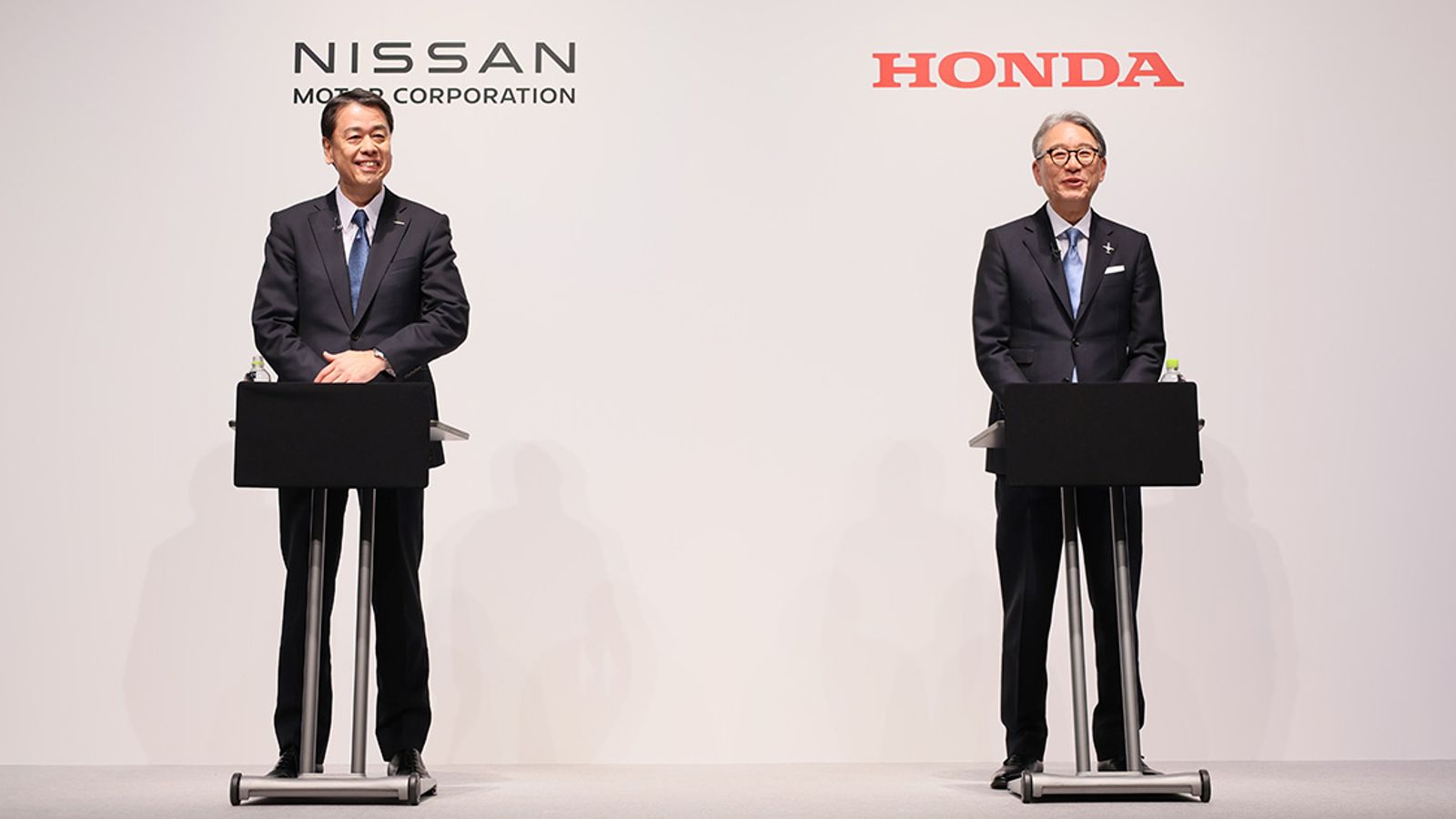
Japan News reports that the merger failed because Honda changed its mind about establishing a joint venture with Nissan and demanded that it become a subsidiary. The outlet quotes Honda President Toshihiro Mibe (above) citing concerns about the timeline, saying “the merger would move at a snail’s pace and the situation could become even more dire.”
This did not go over well with Nissan’s management and board of directors. The board held a vote on February 5th to discuss whether to accept Honda’s new proposal, and only two of the 12 directors voted in favor. Nissan President Makoto Uchida called Honda’s new proposal “crazy” and that he was “astonished” by it.

Related
Honda May Get Its First Full-Size SUV And Pickup From Nissan Merger
The merger could give Honda access to Nissan’s utilitarian know-how.
But, Whose Hybrids To Use?

Another reason Japan News cites for the Honda-Nissan merger failing is hurt feelings over which company’s hybrid system would be used. Honda had reportedly told Nissan to give up its own hybrid system called “e-Power” in favor of Honda’s system. This would save Honda money by increasing its hybrid system’s economy of scale and also save Nissan money by virtue of it using a less expensive hybrid system.
Nissan, however, took offense, according to Japan News, at the suggestion that its hybrid tech was inferior to Honda’s. Truth be told, neither automaker is a hybrid leader in terms of sales. That title is held by their crosstown rival Toyota, which offers a hybrid version of nearly every single model it sells in the US. Honda does sell more hybrids in the U.S. than Nissan, though. The former sold 1.42 million hybrids stateside in 2024 while the latter moved only 920,000 units.
There is, also, a legitimate technological reason that Honda’s hybrid tech is better. Nissan’s e-Power system is a type of series hybrid where the engine only generates electricity for the battery pack and doesn’t move the car at all, similar to the old Chevrolet Volt. This is great technology in urban areas, but it’s less efficient at highway speeds. America has many highways, so it’s not a great fit for one of the largest markets in the world.
Both Honda and Nissan are also working on next-generation hybrid systems that each promises will outperform their current technology. Nissan says the next-gen e-Power system will be 15-percent more fuel efficient on the highway, while Honda’s new hybrid system will cost 30-percent less to produce.

Related
Nissan’s e-Power Hybrid System: A Missed Opportunity In America
Nissan’s e-Power system is good, but while it’s not perfect, did you know a version for North America was already in development?
What Happens Next?

Japan News claims Nissan is considering merger talks with other companies, particularly Taiwan’s Hon Hai Precision Industry Co., also known as Foxconn, which has more than dabbled with the idea of getting into the automobile industry in a big way. The outlet also hinted that Toyota could make a move if Nissan’s situation became more dire.
Believe it or not, Honda and Nissan will also still consider working together on electric vehicles and in other areas, but it’s hard to believe these two Japanese companies with long histories and even longer memories will be able to forgive and forget this failed merger.