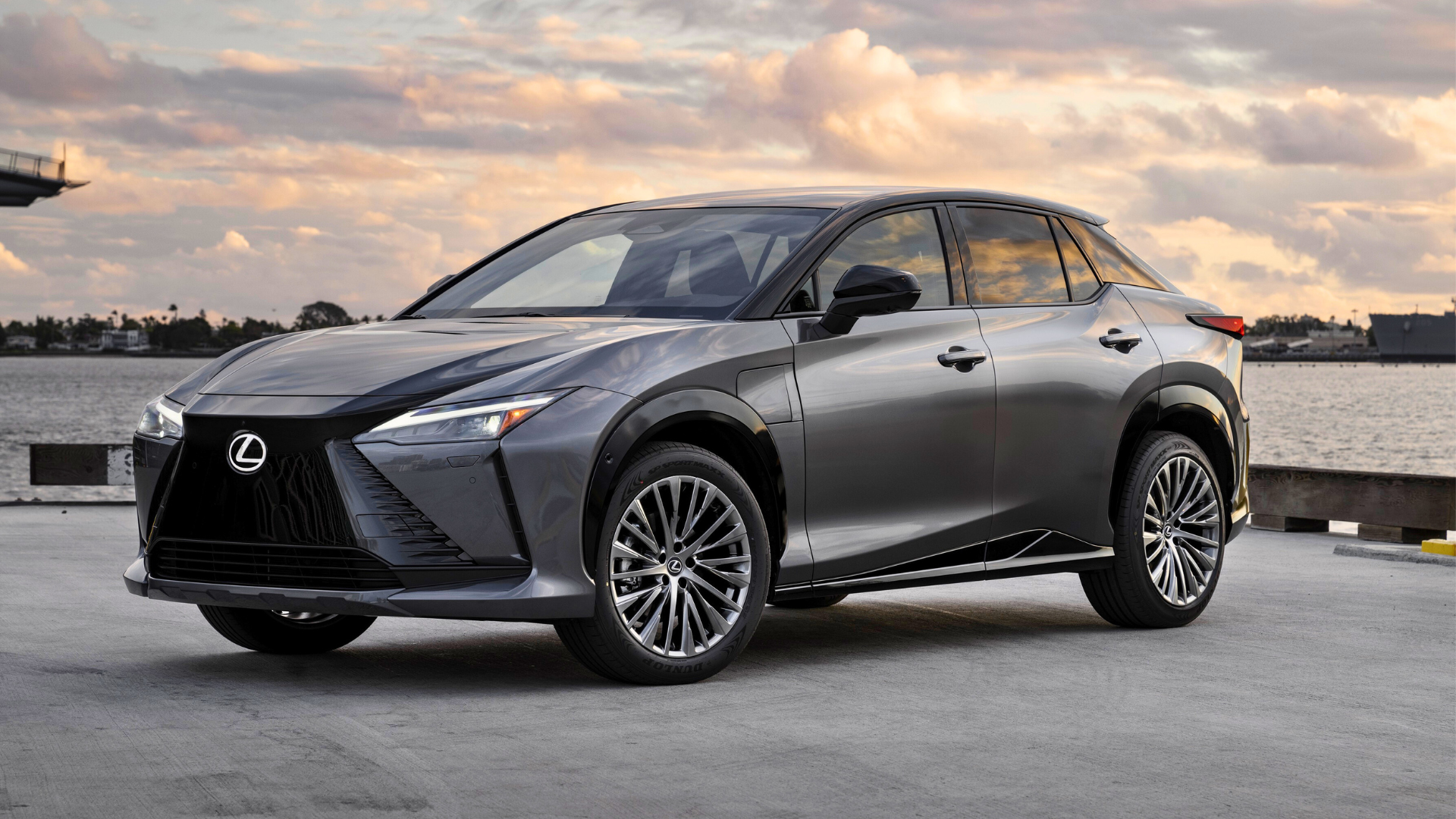
Lexus is getting ready to execute a conservative but effective global electrification strategy in the coming years, but until then, American consumers only have access to its TNGA-e-based RZ crossover, which is a much more premium option when compared to the Toyota bZ4X and Subaru Solterra
Subaru Solterra
, despite sharing most of the same parts. With it being an electric crossover, you thankfully don’t have to worry about high running and refueling costs, as EVs typically tend to benefit from much lower running and maintenance fees.
Lexus only offers the RZ with one battery pack, so it’s an easy task to understand just how much you’ll be paying to have the modules replaced once the pack reaches the end of its lifespan. Battery replacements are currently a very expensive job, but considering how long they last, you’ll generally get to enjoy good value out of it. There’s also a possibility that the modules will be much cheaper within a decade as brands continue to prioritize energy storage developments. The Toyota Group is currently at the forefront of solid-state battery technology, with the promise of range claims as high as 745 miles on a single charge. Until then, this is how much you can expect to pay to replace the company’s existing lithium-ion battery pack.
In order to give you the most up-to-date and accurate information possible, the data used to compile this article was sourced from Lexus and Toyota’s websites and other authoritative sources, including the EPA and eBay.

Related
Review: The 2024 Lexus RZ 300e Luxury Is A Comfortable-But-Compromised EV
Down on power but up on range, the RZ 300e will woo the Lexus-faithful, but it is, sadly, still outclassed by other EVs.
The Lexus RZ’s Single Battery Option
Lexus only sells the RZ with the group’s 71.4 kWh battery pack
, which only offers about 68 kWh of usable energy. The range currently consists of the single-motor front-wheel drive 300e and dual-motor. The base configuration produces 201 horsepower and 196 pound-feet, while the dual-motor configuration increases to a more impressive 308 horsepower and 321 pound-feet. Toyota sources this battery from LG Energy Solutions, which it’s also working with to develop one of the
first solid-state battery options
due to hit the EV market within the next decade.
Performance Specifications
| RZ 300e | RZ 450e AWD | |
| Price | $55,175 | $59,875 |
| Powertrain | Single AC synchronous electric motor | Dual AC synchronous electric motors |
| Transmission | Single-Speed Automatic | Single-Speed Automatic |
| Horsepower | 201 HP | 308 HP |
| Torque | 196 LB-FT | 321 LB-FT |
| Driveline | Front-Wheel Drive | Rear-Wheel Drive |
| Battery | 68 kWh Net | 68 kWh Net |
| Range | 244-266 Miles | 196-220 Miles |
| Fast Charging Time | 20 Minutes | 20 Minutes |
| Energy Consumption | 27-31 kWh/100 Miles | 31-36 kWh/100 Miles |
| 0-60 MPH | 7.8 Seconds | 5.0 Seconds |
| Top Speed | 99 MPH | 99 MPH |
| Towing Capacity | N/A | 1,653 Pounds |
Looking forward, Toyota will buy out Panasonic’s stake in Primearth EV Energy, resulting in it transforming into a fully owned subsidiary that aims to ramp up battery production. PEVE, Toyota Industries, and Prime Planet Energy and Solutions handle Toyota’s battery production for all of its electrified products.
Prime Planet also produces batteries for electric and plug-in hybrid cars. Toyota plans to keep working with these companies on battery production and development. PEVE plans to expand its production to include batteries for electric and plug-in hybrid vehicles, allowing Toyota to meet rising demand. This shift will also help Toyota stay competitive in battery mass production.

Related
2024 Lexus RZ: Everything Confirmed So Far
The 2024 Lexus RZ arrives for its second year with a new trim and updated standard charging option while maintaining a sense of sophistication.
How Much A New Lexus EV Battery Costs

Unfortunately, Lexus doesn’t list its battery replacements on its dedicated parts website, but we can head over to Toyota’s catalog, considering the batteries and platforms are completely identical. Toyota doesn’t list the full battery pack on its site, but we do get a peek at what it charges for all the auxiliary components. This includes the onboard charger, inverter, and voltage sensors, with prices ranging between $7,338.40 and $14,380.78. These are components that you’ll only ever need to have changed or repaired if your RZ sustains any significant damage via a collision or manufacturer fault. We’ve also managed to uncover a third-party retailer that lists a pair of battery packs, indicating that you can expect to pay $19,831.50. This is for the full pack, before labor costs, which you can expect to increase your repair bill by a few thousand dollars.
It’s worth understanding that an EV’s battery pack doesn’t need to be replaced outright once it reaches the end of its lifespan. Instead, you only need to exchange the decayed modules. The RZ’s 71.4 kWh battery pack consists of eight modules, so you can expect to pay between $8,000 and $10,000 for a new set of modules, excluding labor costs.
Toyota is officially partnered with Panasonic for its battery supply chain. Toyota also sources batteries from other companies like CATL and BYD
to meet increasing demand. The company plans to introduce next-generation battery technologies, including
solid-state batteries as soon as 2028
, with the promise of faster charging times, improved safety, and longer ranges. Toyota has also announced plans to reduce battery costs by 50 percent through innovations in materials and production, which is likely to improve the EVs under its Lexus umbrella as well. The Japanese automotive giant aims to achieve carbon neutrality by 2050, with these advancements playing a key role in scaling up its EV offerings.

Add TopSpeed to your Google News feed.
How Long A Lexus EV Battery Lasts

Lexus indicates that RZ’s battery will retain 90 percent of its capacity after 10 years of regular usage with the best maintenance and care practices. There are some practices you can partake in to extend the lifespan of your RZ’s battery, which are fairly easy to integrate into your daily driving lifestyle. Maintaining a strict and balanced charging procedure is the best way to extend long-term battery life.
To do this, you’ll have to ensure that you keep the battery’s charge between 20 and 80 percent, if you plan on using it to conduct a daily commute. You should also avoid regularly draining the battery from 100 percent, because this will accelerate how quickly your battery pack loses chemical stability to the point where you’ll need to have the modules replaced.
How Lexus Conducts An EV Battery Replacement
- Lexus technicians diagnose the battery to confirm module degradation or defects.
- They then remove the high-voltage battery pack from the RZ for detailed inspection.
- The faulty or degraded modules within the battery pack are identified using specialized diagnostic tools.
- Technicians replace only the defective modules, rather than the entire battery pack, minimizing waste and cost.
- After replacing the modules, the battery is reassembled and thoroughly tested to ensure it meets performance standards.
- Finally, the reinstalled battery undergoes additional tests to verify proper integration with the vehicle’s systems.
It’s also a good idea to use DC Level Three fast chargers sparingly, as frequent exposure to high voltage can degrade battery cells faster than regular charging due to its higher charging temperature. Overnight charging via a Level One or Two AC household charger in a shaded or climate-controlled area is the best condition to maintain battery life. Preconditioning to warm up the battery before driving in cold weather conditions is also a fundamental practice to adopt. Thankfully, most EVs come standard with a battery heater, or at the very least, they are optionally available. If you plan to use the RZ on less frequent occasions, it’ll be best to keep the state of charge at around 50 percent and store it in a cool and dry environment.

Related
2024 Lexus RZ: Every Trim Compared
Take a look at the 2024 Lexus RZ lineup, which introduces a new trim, offering an EPA-estimated range of up to 266 miles, and a lower starting price.
Lexus Covers The RZ’s Warranty For Eight Years

Interestingly, the Lexus RZ doesn’t benefit from the
same battery warranty as the bZ4X
, but there’s no clear explanation as to why this is the case. The RZ’s high-voltage battery and all related electrical components are covered for eight years or 100,000 miles, which is the industry standard, but just shy of the bZ4X’s best-in-class 10-year or 150,000 warranty coverage. It’s important to follow Lexus’s recommended maintenance practices to keep the warranty valid, including proper charging habits and avoiding misuse.
If the vehicle is sold within the warranty period, the warranty transfers to the new owner, which helps maintain the resale value of the RZ. The battery warranty is separate from the standard vehicle warranty, ensuring specific protection for the high-voltage system. Lexus’s extensive service network is available to handle any warranty-related battery issues efficiently.
| Type | Length |
|---|---|
| Full Warranty | 48 Months/50,000 Miles |
| Battery Warranty | 96 Months/100,000 Miles |
| Roadside Warranty | 48 Months/Unlimited Miles |
| Corrosion Warranty | 72 Months/Unlimited Miles |
Lexus’s warranty covers the repair or replacement
of the EV battery if it drops below 70 percent of its capacity during normal use. The warranty applies to both the lithium-ion battery and any factory-installed components related to the battery’s performance. You need to keep in mind that routine degradation of the battery’s capacity from regular use may not be fully covered, as this is typical with EVs over time. This is why battery care is an essential component when considering EV ownership.