It took 13 years and untold billions of {dollars} to make a single take a look at automobile. Mercedes lately introduced that it was road-testing an EV with a solid-state battery in it. It is a historic feat— nobody within the historical past of solid-state batteries has ever bolted one right into a automobile and pushed it. Nevertheless, driving a single electrical automobile on a testing monitor just isn’t the identical as constructing a viable manufacturing line. Regardless that Mercedes has made the large leap from laboratory to proving grounds, solid-state batteries stay fiendishly troublesome to mass-produce.
In an effort to provide the most recent and correct info attainable, the information used to compile this text was sourced from numerous producer web sites and different authoritative sources.

Associated
Nissan Launching Strong State Batteries For EVs And Hybrids, And Quickly
This superior know-how promised larger vitality density, security, and charging velocity.
Giant Strong-State Batteries Are Very Laborious To Make
- Strong-state batteries have traditionally solely been utilized in very small gadgets.
- Numerous issues come up when trying to make large-sized ASSBs, similar to air gaps and dendrites.
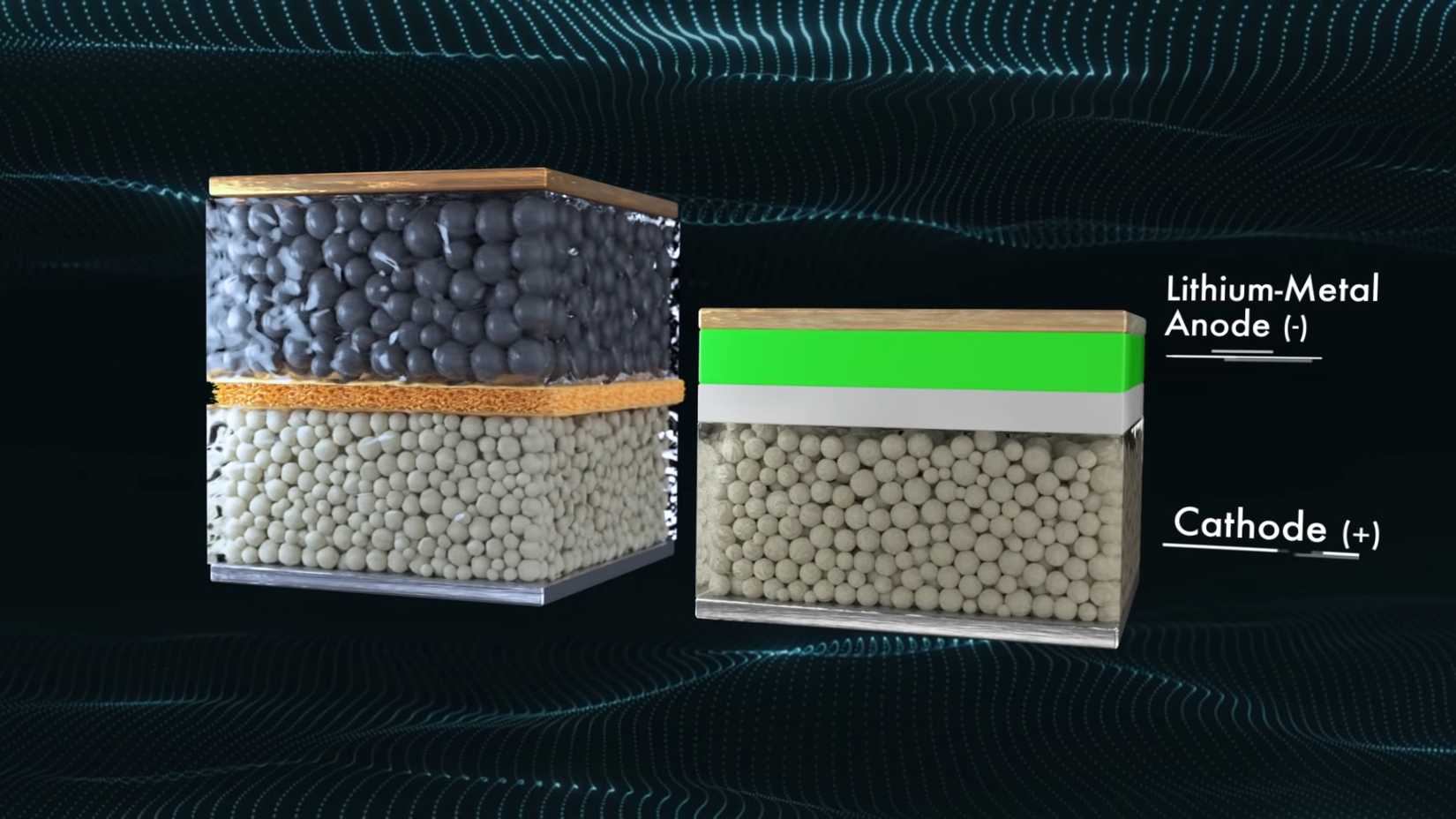
As a quick refresher, solid-state batteries retailer their vitality in strong matter. (Different batteries use to retailer their vitality in a liquid or a paste.) Though solid-state batteries are an outdated know-how, they’ve solely been used for small gadgets like pacemakers, listening to aids, and (extra lately) wearables. Other than the occasional dead-end laboratory experiment, nobody tried to make giant ASSBs (the A stands for “all”) till Toyota in 2012. As proven by the lengthy and costly improvement that ensued, Toyota quickly found why nobody else had tried to make a car-sized ASSB. If it was a simple course of, Toyota’s hypothetical ASSBs would have made manufacturing by now.
At first, the remainder of the auto business appeared to take a look at Toyota’s costly undertaking with skeptical bemusement. However in some unspecified time in the future across the 12 months 2020 (if not just a little earlier than), different firms began to frantically throw cash into their very own solid-state makes an attempt. Amusingly, Mercedes managed to get a solid-state battery right into a automobile earlier than Toyota did.
It’s All About Contact Space

One in every of ASSBs’ greatest shortcomings is that strong matter doesn’t make good contact with something it comes up in opposition to. Regardless of how finely floor the strong granules are, there’ll all the time be little air gaps. And naturally, electrical energy can not journey by means of the air with out arcing, which (to place it mildly) just isn’t desired within batteries.
Air gaps are a big drawback the place the strong electrolyte meets the battery’s electrode. (Fast terminology refresher: the electrolyte shops the battery’s vitality. The electrode is what carries the electrical energy from the electrolyte to every little thing else. That’s, the electrode is what one connects to exterior wiring.) Each little air pocket between the electrolyte and the electrode is an space the place electrical energy can not circulate.
In fact, numerous battery designs mitigate this drawback in several methods. For instance, Honda (one other firm that Mercedes beat within the solid-state race) is stamping its solid-state batteries collectively in meeting. In different phrases, it’s squeezing all the gaps out and compressing the strong electrolytes as a lot as attainable.
Dendrites Are Tough To Forestall And Destroy Batteries From Inside

Dendrites are small, spiky lithium crystals that typically kind within solid-state batteries as they age. They all the time develop out of one of many battery’s electrodes, versus spontaneously producing all through the battery’s inside. They’re such an irksome drawback in solid-state batteries that they’ve impressed numerous scientific journal articles about learn how to theoretically get rid of them.
Regardless that Honda nonetheless hasn’t put in certainly one of its batteries in a automobile, it has developed a attainable resolution: a skinny plastic barrier over the electrodes. This plastic could be skinny sufficient to permit electrical energy to freely circulate by means of it, however would nonetheless stop the electrolyte and electrode from touching one another. In concept, dendrites can not begin rising out of the electrode if the battery’s lithium by no means touches it.

Associated
Anode-Free Strong-State Batteries May Present Extra Than 500 Miles Of EV Vary On A Cost
This might end in smaller, cheaper, extra energy-dense batteries.
No One Has A Manufacturing Line Up But

Regardless that Mercedes has achieved the near-impossible by really putting in an ASSB right into a automobile and driving it (it solely took 13 years after Toyota first tried to make the batteries work), nobody has provide you with a way to crank them out of a manufacturing facility. Producing a couple of laboratory one-offs may be very completely different from cranking out batteries by the truckload. Mercedes will all the time be the primary firm to truly drive a solid-state battery, however up to now no firm has grow to be the primary to truly mass-produce them.
Billions (Sure Billions!) Of {Dollars} Are Going Into Battery Manufacturing Strains

The dearth of ASSB manufacturing strains just isn’t on account of lack of funding. Numerous automobile firms have introduced their very own formidable manufacturing facility plans. Honda was maybe essentially the most audacious. Close to the top of 2024, it claimed that it might have a pilot manufacturing line up and operating by January 2025. Certainly, it claimed that it had already begun building on the large constructing and was already getting ready the tooling that will be put in in it. Nevertheless, January got here and went with none batteries.
Apparently, Mercedes has but to announce that it’s both constructing or investing in an ASSB manufacturing facility regardless of being the primary firm within the historical past of vehicles to truly drive one.
Many Automakers Are Collaborating With Outdoors Battery Firms

A number of automakers (together with solid-state pioneer Mercedes) have entered into partnerships with numerous battery firms as an alternative of making an attempt to develop an ASSB alone. Certainly, for a couple of years it appeared like anybody who might incorporate a battery firm and slap collectively a prospectus might appeal to auto execs bearing cash. Mercedes partnered with an organization referred to as Factorial Power, and in the end turned the primary firm to ever drive a solid-state EV. (One can not emphasize sufficient how historic this feat is.)
Elsewhere within the business, Ford and BMW have entered right into a joint partnership with an organization referred to as Strong Energy. Hyundai signed an settlement with Factorial. However regardless of sharing a battery firm with Mercedes, Hyundai has but to get a take a look at automobile with a solid-state battery onto the street.

Associated
Hyundai And Kia’s New Strong-State Batteries Will not Be Right here For A Whereas
Hyundai and Kia say their new solid-state batteries will not be round till at the least 2030.
Semi-Strong-State Batteries: May They Be The Future?

- Semi-solid-state batteries, which mix liquid and strong electrolytes, have lots of the benefits of all-solid-state batteries.
- Semi-SSBs are already and manufacturing, and EVs outfitted with them are already obtainable for lease. Nevertheless, a lot of the auto business is constant to pursue all-solid-state batteries.
All-solid-state batteries might get all the press, however semi-solid state batteries are literally obtainable on supplier heaps. These are batteries that comprise a mix of strong and liquid electrolytes, thus getting the benefits of each. The strong electrolytes permit them to retailer extra vitality in much less area than lithium-ion batteries. The traditional electrolytes get rid of all these annoying issues of air gaps and poor contact. Semi-SSBs have one very substantial benefit over all-solid-state batteries: they’re already obtainable.
Semi-Strong State Batteries Are Already Out there To The Public

Whereas the remainder of the business presses on with all-solid-state batteries, Chinese language EV producer Nio gives EVs with semi-solid state batteries for lease. Given the auto business’s lengthy and (up to now) fruitless wrestle with all-solid-state batteries, that is value emphasizing. EVs with semi-solid-state batteries are already obtainable to anybody who reveals up on a supplier lot. They’re not merely being road-tested. Nor are they solely obtainable to a couple choose auto journalists or restricted to a proving floor. Granted, Nio is simply leasing vehicles with semi-solid-state batteries as an alternative of promoting them. However that is nonetheless the primary time that strong electrolytes have powered EVs on public roads.
The 648-Mile Check Drive That Launched Semi-SSBs To The World

Nio introduced its roadworthy semi-SSBs in a blinding means: by livestreaming a 1,000-kilometer drive on a single cost. (1,000 kilometers is about 648 miles.) The CEO personally took the wheel for a part of the drive, and the automobile nonetheless had about 3% of its battery cost left on the finish of the journey.
With that in thoughts, it’s considerably baffling that few different firms are pursuing semi-solid state batteries. It can’t be emphasised sufficient: they’re already in mass manufacturing. And it bears repeating that even Mercedes hasn’t introduced any manufacturing plans, and that firm managed the beforehand unimaginable feat of placing one right into a automobile.

Associated
Perhaps Strong-State Batteries Aren’t As Good As We Thought
In comparison with some lithium-ion battery designs at the moment in manufacturing the energy-density distinction is negligible.
The Ongoing Attract Of Strong-State Batteries

In concept, solid-state batteries will get rid of the commonest complaints about EVs. Many individuals don’t notice it, however most objections to EVs (brief vary, lengthy cost instances, and so on.) come from the battery and never the remainder of the automobile. However solid-state batteries can retailer much more vitality than lithium-ion batteries of the identical measurement. This is able to permit automobile producers to take away a number of hundred kilos from the curb weight whereas additionally including a couple of hundred miles of vary. Quick-charging doesn’t harm them. Moreover, they don’t lose their cost in chilly climate like lithium-ion batteries do. Moreover, extreme warmth doesn’t destroy them as simply. Most EVs spend their time outdoors with barely any shelter from the climate, so warmth and chilly resistance are necessary components.
Strong-State Batteries Have A Lot Of Promise In Testing Labs

At this level, all the auto business’s allegedly wonderful take a look at outcomes appear to be nothing in comparison with Mercedes’ success in really getting one right into a automobile. In any case, a testing report can by no means evaluate to an precise drive. Nonetheless, different firms have made respectable achievements with solid-state batteries. Toyota claims that its battery has a variety between 745 and 932 miles (relying on which press launch one reads). Extra notably, Volkswagen drained and recharged its personal solid-state battery 1,000 instances and located that it nonetheless had 95-percent of its capability. If all solid-state batteries have this degree of sturdiness, the battery might lastly be “good for the lifetime of the automobile.” (In any case, most ICE vehicles go from the manufacturing facility to the pick-and-pull with the identical engine.)
Lithium-Ion Batteries Will not Be The Peak Of Battery Tech Endlessly
Mercedes’ marriage of a automobile and a solid-state battery is an enormous feat. Nevertheless, this doesn’t imply that solid-state batteries will ever make it to supplier heaps. Different automotive breakthroughs made it to the stage of “working idea automobile” solely to fizzle out. Chrysler even constructed a small fleet of working turbine vehicles earlier than axing this system. Mazda’s on-again, off-again flirtation with rotary engines has yielded a couple of manufacturing fashions over time, however in the end gone nowhere.
However even when solid-state batteries show to be a waste of a number of a long time and some billion {dollars}, lithium-ion batteries aren’t adequate for future EVs. They’ve comparatively lengthy cost instances, brief lifespans (most EV batteries put on out lengthy earlier than the remainder of the automobile), and different shortcomings. So even when solid-state batteries find yourself as an costly footnote in automotive historical past, batteries are going to alter.