While several American, European and even Japanese automakers invested massively in China over a decade ago in a quest to grab market share, the winds have turned for foreign brands as Chinese buyers towards more interesting domestic automakers. This has led to a downward spiral for the industry’s top automakers, forcing them to rethink their entire Asian strategy.
General Motors is one such automaker, which has been manufacturing and selling vehicles in China under the SAIC-General Motors joint venture since the late 1990s. But although the General is well-grounded in electric vehicle (EV) development and manufacturing, it has seen its overall Chinese sales dropping 14-percent in 2024 in a market where EV sales are surging. GM needs to rethink its strategy, and fast. Here’s how it plans on turning the ship around.

Related
General Motors Is Killing It Right Now
From affordable EVs to record-setting Corvettes, the General has never punched this hard.
New Models, Both EV And ICE
It’s important to mention that the SAIC-GM joint venture is the result of a 30-year contract signed in 1997. For GM’s next investments on Chinese soil to come to fruition, it would mean a renewal of that contract before the June 2027 end date.
But as I write this, it’s unclear where this agreement currently stands. The general assumption is that GM is taking a step back amidst the current trade tensions between the U.S. and China before taking action. All we know, according to a report from Automotive News on the matter, is that during a meeting with dealers and shareholders on February 18 – spearheaded by Lu Xiao, who became president of SAIC-GM in August – both GM and SAIC plan on revamping their lineup, offering to better compete against aggressive domestic Chinese automakers. As a matter of fact, GM is confident that through this new offensive play, it will derive more than 60 percent of its annual sales in China from electrified models.

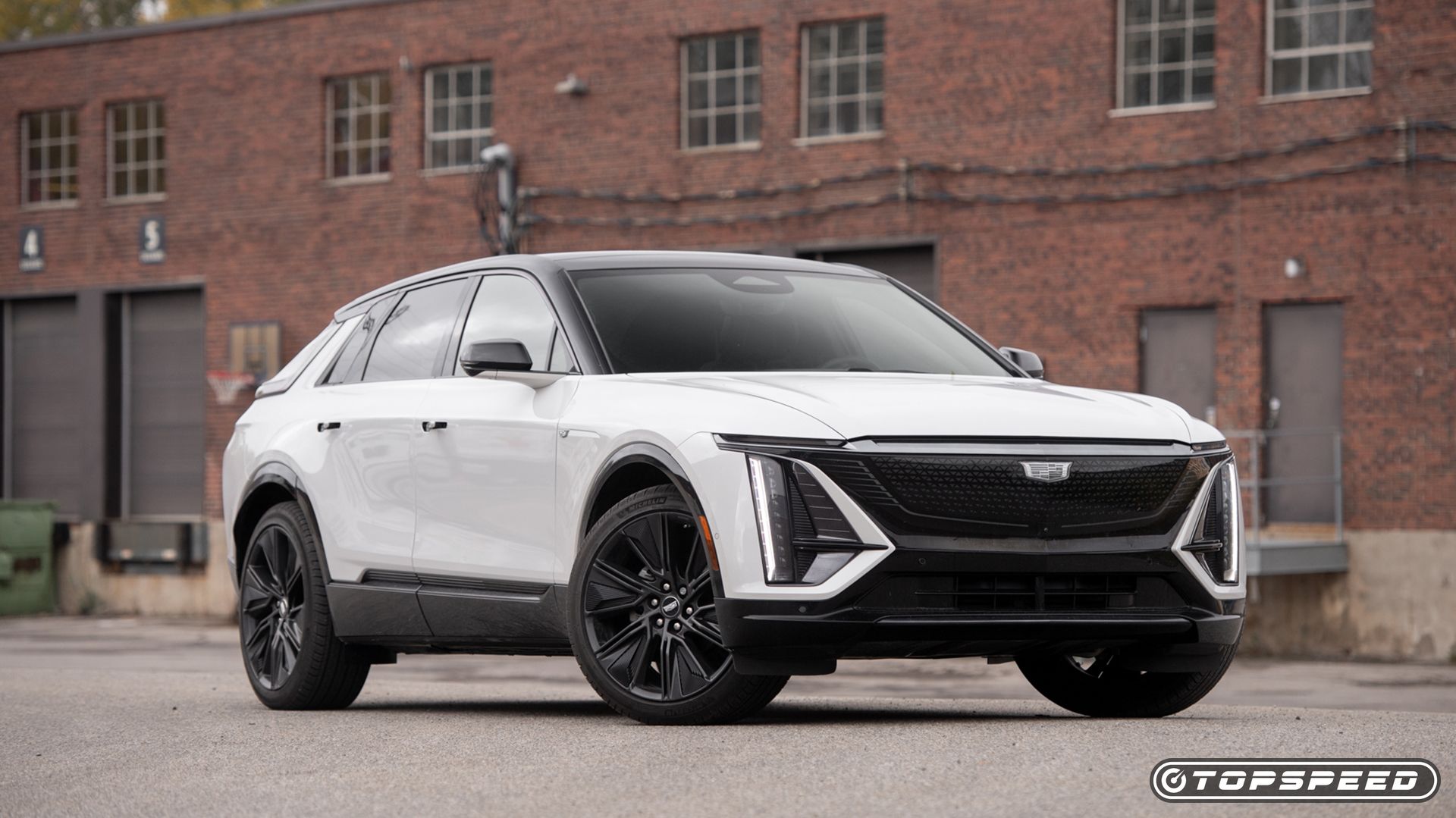
The roadmap includes no less than 10 new electrified models, including EVs, but also plug-in hybrids (PHEV) and range-extended electric models from the Chevrolet, Buick and Cadillac brands. These new additions will hit Chinese showrooms throughout 2025 and 2026. Between 2025 and 2027, SAIC-GM also plans on introducing eight new “upgraded” internal combustion engine (ICE) models in what China calls mainstream and high-value segments. It’s still unclear what “upgraded” means for GM. My guess is some form of hybrid or mild hybrid assistance.
More Technologically Advanced Models
Above all, if GM wants to take on the highly technological Chinese machine, it must also arrive with technologically-dense products, which is also on its list of priorities for this new strategy. GM says that these new models will all be built on next-generation architectures to host both EV and ICE powerplants, but also next-generation electrical architectures, autonomous driving capabilities, ultra-fast-charging capability, and smart cockpits.
In terms of fast charging, GM’s Chinese-bound EVs will surpass any model the carmaker currently sells here. Still utilizing the Ultium Cell technology as its foundation, these new electric architectures will integrate new battery chemistry, such as LFP (for lithium-ion phosphate), as well as 6C DC fast-charging capability, all powered by a near 900-volt electric architecture. GM says that these new EVs will exceed 600 kW of charging power, and that the range-extended models will offer more than 1,500 kilometers (930 miles) of driving range thanks to a combination of EV and ICE propulsion.

Finally, autonomous driving capabilities. Lu Xiao said in the meeting that all of GM’s next-generation models will be compatible with L3 autonomous driving technology, but that L2++ intelligent driving functions will begin their implementation as of this year. Over-the-air (OTA) updates will then allow GM to improve self-driving technology on the go over time. It’ll be interesting to see how GM will turn its Chinese market ship around and, more importantly, if these new models will help it compete in one of the world’s most brutal automotive markets.