Solid-state batteries
don’t exist yet, but the competition is already getting fierce. Toyota may be the star of the solid-state show, but it is not the only company trying to make these nearly-mythical “wonder batteries” happen. Honda, one of Toyota’s closest rivals both in reliability and sales, has also been putting its money and engineers into solid-state batteries. Nissan, the Japanese auto industry’s part-French cousin, has also gotten into the solid-state game. Like everyone else in the auto industry, Nissan’s solid-state progress has yielded a lot of enthusiastic press releases, a handful of impressive numbers, and many promises for the hypothetical near future. Here’s where the company stands today.
In order to give you the most up-to-date and accurate information possible, the data used to compile this article was sourced from various manufacturer websites and other authoritative sources.

Related
Solid-state Battery Partnerships That You Must Know About
The race to mass-produce solid-state vehicles is fierce, and carmakers are partnering with tech companies to stay ahead of the curve.
Where Nissan’s Solid-State Battery Stands Today
- Nissan was one of the last major car companies to start working on solid-state batteries.
- Nissan has already built an SSB factory.
- Nissan is co-developing its SSB with NASA for use both in automobiles on Earth and for rovers in outer space.
- There are very few publicly available specifications for Nissan’s solid-state battery.
Instead of getting in on SSBs early, Nissan seems to have waited until the rest of the industry caught solid-state fever. The Japanese automaker first announced that it would get in on solid-state batteries in 2021. Aside from a steady stream of press releases with predictable phrases like “game-changing” and “next generation,” Nissan has been quieter about its SSBs than most other automakers. But like its would-be solid-state rival Toyota, Nissan has been developing its own SSBs rather than slinging money bags at the nearest battery startup. It should also be noted that Nissan shares a few boardroom seats with French company Renault, which has also invested in SSBs for both cars and aviation.
Nissan May Be Nearly Ready To Start Manufacturing
If Nissan’s solid-state batteries aren’t ready for mass-production, the company is spending a lot of money trying to make it look otherwise. Nissan has already completed an SSB factory in Yokohama. Or at least, the building is complete. The actual manufacturing setup is still a work in progress. But while it is technically possible that Nissan could use the space to produce something unrelated to solid-state batteries, all signs point to the batteries coming out on schedule.
What Numbers And Specs We Have So Far

Even though Nissan claims its batteries will be ready for the public in a few short years, the company has been remarkably terse on specifics. It claims that its SSBs can hold twice as much charge as lithium-ion batteries, and has quoted prices of $65 to $75 per kilowatt-hour (depending on which press release one reads). Aside from those few numbers, Nissan’s solid-state announcements tend to avoid any specifics and instead use ever-popular words like “sustainability” and “groundbreaking.”
Nissan’s somewhat tight-lipped stance regarding its solid-state batteries is somewhat confusing, given that it is currently working with NASA to develop them. Most other auto companies have formed solid-state partnerships with the first pop-up battery company they could find, but Nissan is co-developing solid-state batteries for use in future extraplanetary rovers. Anyone can sign a contract with some random Silicon Valley startup, but very few automakers have literally worked with NASA.

Related
Are Solid-State Batteries A Game-Changer or Still Years Away?
We recently posted a story that’s getting a lot of buzz, about how Toyota has put every automaker on notice with its 745-mile solid-state battery. Sure, it has everyone talking, but how close are we really to seeing this tech in everyday EVs? Solid-state batteries promise longer range, faster charging, and improved safety, but many skeptics argue we’re still years from mass production due to cost and manufacturing challenges. So, is Toyota’s breakthrough a real step forward, or just a glimpse of a future we won’t see anytime soon? Are you excited for this tech, or do you think the solid-state hype might be overblown?
Ambition 2030: Nissan’s Solid-State (And Other All-Electric) Plans

- Solid-state batteries are at the center of Ambition 2030.
- Nissan also intends to dramatically increase its EV output, both by adding new models and by increasing output.
- Because Nissan has been manufacturing EVs for a long time, it no longer needs to prove itself to skeptical car buyers.
Every company has long-term plans, but not all of them give such plans a catchy name. Nissan, however, has dubbed its long-term EV initiatives “Ambition 2030.” As previously noted, it is surprising that Nissan has not taken every chance it can to use phrases like “as part of our partnership with NASA” when discussing its long-term plans.
At present, Nissan has put itself in a very fortunate place with regard to EVs. The company got into electric vehicles relatively early with unapologetically mundane offerings like the Leaf. Of course, it is difficult to get any well-photographed magazine spreads or gushing reviews for a severely practical vehicle that doesn’t even try to be “sporty.”
But as it turns out, more people buy practical hatchbacks than sports coupes. Instead of wooing journalists who write about cars, Nissan aimed its first major EV at the people who actually show up at dealer lots to buy them. The Nissan Leaf may get a begrudging nod of respect from automotive cognoscenti, but it has won the approval of all the people who have driven one. Even those who have never even been a passenger in a Nissan Leaf will at least half-recognize that it doesn’t have a poor reputation. As a result, Nissan does not need to “prove itself” with any future EVs. It has already gotten past that stage.

Add TopSpeed to your Google News feed.
Ambition 2030: A Short Overview

Solid-state batteries are the biggest part of Ambition 2030. The company intends to sell a solid-state powered EV by fiscal year 2028. Indeed, Toyota seems to have set the standard by announcing that it would have SSBs ready for the public by 2027 (later modified to “2027 or 2028”). Every other automaker getting into solid-state batteries seems to be converging on the same date range.
Solid-state batteries aside, Nissan intends to launch somewhere between 19 EVs by 2030. In more general terms than BEVs, the company intends for “electrified” vehicles to represent 55-percent of its sales by that same year. (As a quick note, “electrified vehicle” is not the same as “electric vehicle.” It is a catch-all term for EVs, hybrids, hydrogen cars, and anything else that uses an electric motor somewhere in its powertrain.)
Nissan’s Current EV Offerings
Nissan’s current EV offerings are relatively small. It offers the Leaf hatchback and the Ariya SUV. Nissan is apparently taking the same approach to EVs that Toyota did to hybrids: making them too middle-of-the-road to frighten away customers. It’s true that sensible hatchbacks and family-friendly SUVs rarely excite car purists. However, those vehicles are very good at getting money out of wallets. By designing its current EV lineup to appeal to as many people as possible, EV is rapidly building a customer base for its future vehicles.

Related
The Cheapest Nissan Electric Cars And SUVs For 2024
Nissan has a lot of credibility and pedigree as an EV pioneer for the technology and affordability of its entry-level Leaf and Ariya models.
Nissan’s Hyper Force Concept Car Is Solid-State Powered
- The Hyper Force is Nissan’s SSB-powered electric concept sports car.
- The Hyper Force has a quoted output of 1 megawatt, which is 1,341 horsepower.
- Nissan has neither officially confirmed nor denied that the Hyper Force is the design for the next-generation GT-R. However, the company has hinted that it might be.
In 2023, Nissan took its new Hyper Force electric concept coupe to various car shows. This sports car was aimed directly at the discerning automotive reporters who came to the shows with cameras and notepads. The most dazzling part of the Hyper Force was Nissan’s claim that the it was powered by solid-state batteries. If Nissan actually bolted an SSB into the car, it could make the Hyper Force the first EV in the history of automobiles to ever be powered by a solid-state battery.
However, it’s hard to tell whether the Hyper Force actually had any solid-state batteries in it. Nissan seems to have merely placed it onto various display platforms instead of actually driving it. It is entirely possible that Nissan merely claimed that the Hyper Force could hypothetically be powered by solid-state batteries, in the same way that Ford never actually put a working nuclear reactor into its 1957 Nucleon concept.
The Hyper Force: An Overview

Aside from the solid-state batteries that purportedly were installed in it, the Hyper Force is a standard-issue “enthusiast-approved” car. It has two doors, two seats, two inches of ride height, and large rims bearing tires that are only two millimeters thick. Like any vehicle aimed at auto journalists, the Hyper Force has a thoroughly excessive amount of power. Nissan claims it sends one megawatt to the wheels. (That converts to 1,341 horsepower.) The car is aggressively straight-sided, which could be a nod to the nimble 1980s sports cars that put Nissan on the map. (The Hyper Force’s sharp-edged “crumpled metal” aesthetic may be a sign the Cybertruck is going to influence a lot of future EVs in spite of the expert hand-wringing and angry paragraphs that fill car forums.
The interior of the Hyper Force is more interesting than the bodyshell, or any solid-state batteries that may or may not be contained therein. Nissan has made it a throwback to the 1980s, or at least what people today imagine the 1980s looked like. The car almost looks more like a vintage arcade than a working vehicle. The many lines of brightly-colored lights that surround the driver make it look like a futuristic computer simulation from a 1980s sci-fi movie. The seats almost look like they were copied line-for-line from a 1980s toy spaceship. Nissan chose to use a steering yoke instead of a wheel, and (whether intentionally or not) made it look like a vintage game controller. And JDM enthusiasts take note: the steering wheel is not on the left side.
The Hyper Force Concept May Become The Next GT-R
Like every outlandish concept vehicle that does the rounds at car shows, the Hyper Force is probably more of a “vision statement” than a production-ready design. However, there has been a lot of speculation that the Hyper Force is actually a preview of Nissan’s plans for a revived GT-R. Of course, the Hyper Force would require heavy modifications to be street-legal. Nissan hasn’t made any official declaration one way or the other, but did issue a tantalizing statement that it would monitor the public’s response to the Hyper Force as it designs future production vehicles.

Related
The Nissan Hyper Force Concept Previews What The Future GT-R EV Could Be Like
The Nissan Hyper Force Concept is a cutting-edge, eco-conscious electric supercar, redefining the future of high-performance driving.
What’s The Point Of Solid-State Batteries?

Even though solid-state car batteries don’t exist yet, they have already cost the auto industry billions of dollars. Practically every major automaker is flinging money into the solid-state cause, and so are many of the new EV companies that have popped up in Tesla’s wake. Toyota was the first major company to announce that it would make a solid-state EV battery over a decade ago, and even today no one has put one into a car and driven it. Solid-state batteries may ultimately prove an unreachable money sink like fully-autonomous cars, but their hypothetical advantages are too tantalizing for automakers to give up.
The Advantages Of Solid-State Batteries
In theory, solid-state batteries will solve every problem that prevents large-scale EV adoption. Unlike lithium-ion batteries, fast-charging does not shorten their lifespan. Solid-state batteries can withstand severe heat and cold better than lithium-ion batteries. And most importantly, they can store a lot more power than same-sized lithium-ion batteries. This would finally allow EV driving ranges to rival ICE cars, or even surpass them. Indeed, many automakers promise driving ranges well north of 500 miles per charge. Our own readers have confirmed that short range is the biggest reason they haven’t made the switch to EVs.
If Solid-State Batteries Are So Great, Why Doesn’t Every EV Already Have Them?
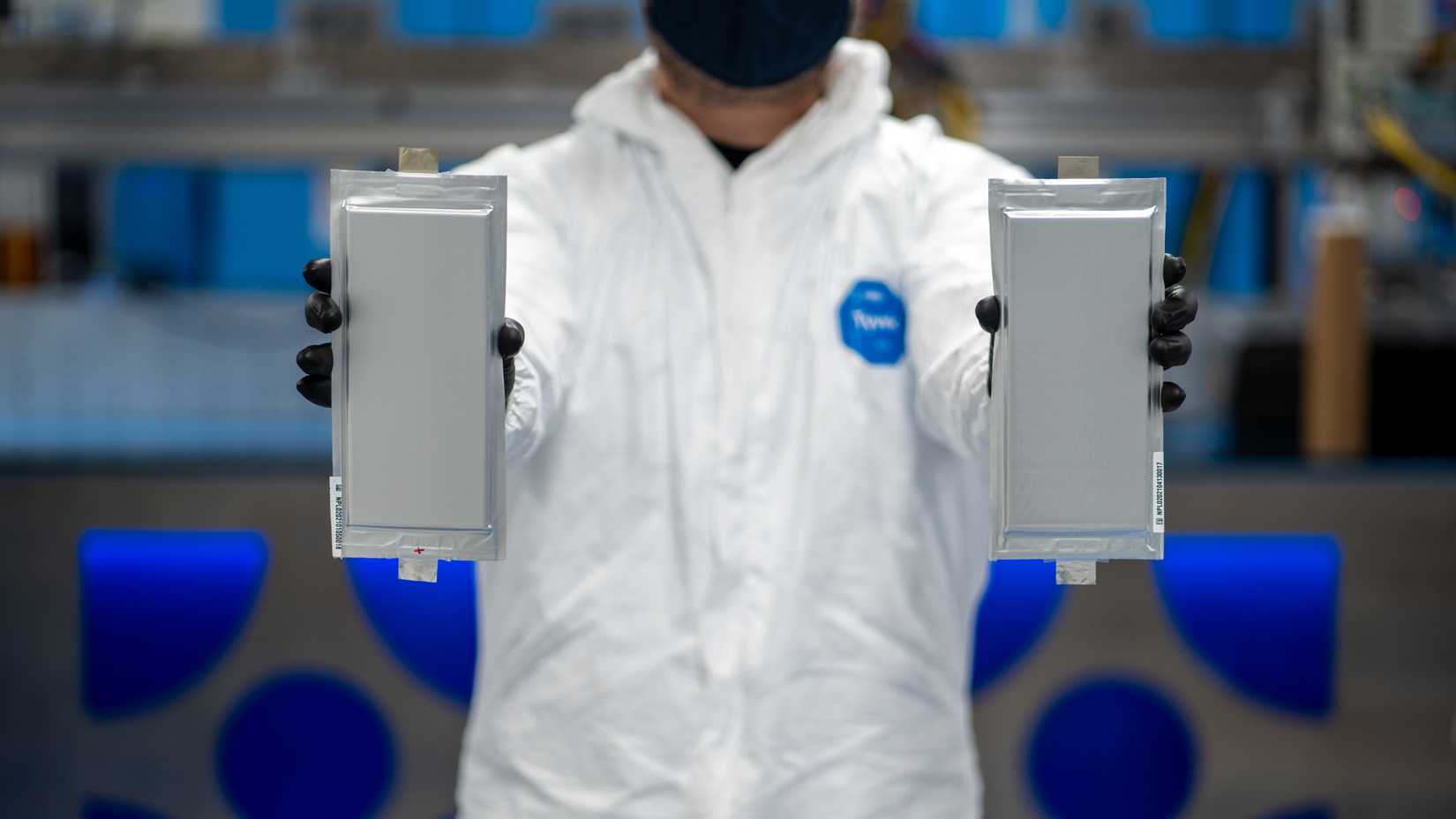
Given solid-state batteries’ hypothetical superiority, it’s easy to wonder why anyone still bothers with lithium-ion. The biggest barrier to car-sized solid-state batteries is physics. To put it simply, a lot of scientific complications show up when trying to make solid-state batteries that are any bigger than a fingernail. While solid-state batteries are an old technology, they only appear in devices like hearing aids, pacemakers, and wearables. If it was easy to make a viable solid-state battery, the problem wouldn’t have defied doctorate-level scientists for decades.
Additionally, solid-state batteries demand more lithium than lithium-ion batteries do. Although topics like “finite resources” can reliably elicit bored eye-rolls and a few snores, the fact remains that lithium is already a scarce resource. The electronics industry is already full of worried whispers about lithium shortages, and EVs use more lithium per battery than any laptop manufacturer. Without some dramatic improvements in battery recycling, an industry-wide crash is closer than most people think.
But even if solid-state batteries continue to be just out of reach, the EV industry still believes they will someday become reality. As aforementioned, Nissan is already building a factory, which suggests that it already has a viable SSB design. After years of failures and lost expenses, the time of solid-state batteries may finally be here.