Toyota is skipping the present generation of EVs and skipping directly to the future. It is true that Toyota only has one EV for sale at present, a paint-by-numbers family-friendly crossover SUV. However, Toyota is preemptively staking out its territory in the next generation of EVs with its solid-state battery. Toyota has been working on a solid-state battery since 2012. While things have looked doubtful in the past, all signs point to success. After all, Toyota wouldn’t build a solid-state battery factory in North Carolina if it wasn’t ready to produce solid-state batteries.
In order to give you the most up-to-date and accurate information possible, the data used to compile this article was sourced from various manufacturer websites and other authoritative sources.

Related
What Makes Toyota’s 745-Mile Solid-State Battery Different From Honda’s
Solid-state batteries barely exist, but the rivalry has already begun; especially between these two Japanese behemoths.
Toyota Has Used Multiple Partnerships To Make Its Solid-State Battery Succeed
- Toyota has done extensive SSB research with Panasonic, which has resulted in more than 1,000 patents.
- Toyota’s partnership with Idemitsu has given it scientific development and a source for raw battery materials.
Toyota is keeping its solid-state battery production entirely in-house rather than contracting with outside suppliers. Solid-state EV batteries are a new technology, and Toyota is not going to risk its decades-old reputation for reliability by letting anyone else possibly mess up its big project. Toyota may have other motives for keeping its batteries away from outside manufacturers. After Chinese company CATL ceased supplying batteries to Tesla to join the Chinese battery consortium CASIP, vertical integration may look a lot more appealing.
Toyota’s Research With Panasonic Has Yielded Over 1,000 Patents
Although Toyota is staying firmly in charge of its battery initiative rather than co-developing with anyone, it has not been trying to develop batteries in isolation. At a relatively early stage, it began collaborating with fellow Japanese company Panasonic. It should be obvious why Toyota would want to work with an electronics manufacturer when developing a new type of battery. The partnership has proven very fruitful. The two companies have joint credit on over 1,000 patents related to solid-state batteries.
Toyota Is Sourcing Materials From Idemitsu
Toyota is making its batteries with lithium sulfides. Of course, very few car companies mine their own raw materials. Like every car company that has recently joined it in the SSB business, Toyota is getting its battery components from other suppliers. However, it is producing the actual solid electrolytes in-house. It is getting the starting ingredients for its electrolytes from petroleum company Idemitsu. The sulfides that will be chemically transformed into lithium sulfides are byproducts of petroleum refining. Toyota has done a lot of collaborative chemistry research with Idemitsu to make this process viable.
But, even after all this tapping of outside brains, Toyota remains firmly in control of its battery manufacturing. It is not forming any partnerships to share it.

Related
Solid State Batteries Have Moved One Step Closer To Reality
Chinese battery maker CATL begins 20-Ah solid-state sample validation.
With Hybrids, Toyota Proved That It Can Succeed With Unlikely Technologies

- People thought hybrids were strange (if they had heard of hybrids at all) before the Prius. Only Toyota could have sold a car with such an unfamiliar powertrain.
- Toyota’s reputation for making dependable cars is one of its biggest assets. Because of this reputation, people will buy cars with strange technology from Toyota that no other company could sell.
Many naysayers will point out that if solid-state EV batteries were possible, they would already exist. It is true that solid-state batteries themselves are a very old technology, even though they are only used in very small devices like pacemakers. However, solid-state batteries won’t be the first time Toyota introduced the world to something that seemed infeasible. Toyota is the company that gave the world hybrids.

Add TopSpeed to your Google News feed.
No One Had Heard Of Hybrids Before The Prius
It’s easy to forget how strange hybrids seemed when the first advance press releases for the Prius came out. Even people who never popped the hood of their own cars were talking about this wacky new car that switches between an engine and an electric motor. Of course, Toyota didn’t invent hybrid cars. However, in 1997, only serious automotive buffs had ever heard of them. The pre-Prius history of hybrid cars had zero business success stories.
In the months leading up to the first Prius, many people had doubts. There was a general suspicion that this newfangled “hybrid” powertrain would break down a lot. After all, whatever was under the hood was a lot more complicated than a simple engine and transmission. A few people even wondered how all of this “hybrid” business could fit under such a small hood. The first-generation Prius looks almost punitively boring now (though it is a lot more stylish today), but it blew people’s minds when it first came out.
Toyota’s Reputation Is Its Biggest Asset
People trust strange new technology from Toyota more than other companies because Toyota’s cars never break down. It is hard to impress anyone with a Toyota that is still happy and healthy after 30 years and 200,000 miles, even though that is a major feat for cars made by any other company.
This long history of indestructible cars allows Toyota to introduce new driving technologies that no other automaker could get away with. Few other companies could have convinced the public to buy a car that somehow switched between an engine and an electric motor while you were driving it. But the first Toyota hybrids came with the implied promise of “It’s a Toyota. It will never die.” Toyota even managed to convince sports car enthusiasts to voluntarily buy a Supra with a BMW engine in it despite BMW’s notorious history of cars that can only make it 20 miles from the nearest mechanic’s lift.
This reputation is one of Toyota’s biggest assets. It means that Toyota doesn’t have to deal with skeptical customers— or at least, not as much as anyone else. When Toyota comes out with a weird new “solid-state” EV battery, a lot of people will likely be suspicious. Even those who know nothing about battery chemistry (that is, most people) will understand that this has never been done before. But if the SSB comes from Toyota, a lot of people’s worries will go away. Instead of asking if it will work, people will ask how Toyota got it to work.
Related
What Makes Toyota’s 745-Mile Solid-State Battery Different From Honda’s
Solid-state batteries barely exist, but the rivalry has already begun; especially between these two Japanese behemoths.
Toyota Is Making an EV without the inconvenience of EVs

- Toyota is waiting until its solid-state battery is ready before launching a full lineup of BEVs.
- While some people may complain about the long development time of Toyota’s SSB, the company’s extensive testing and refining is why its cars last so long.
While Toyota has been very successful with its hybrid lineup (which now extends to practically every model the company offers), it has always seemed a bit hesitant to remove the engine from the equation and let the electric motor stand on its own. Its sole EV offering, the bZ4X crossover SUV, does not generate any excitement. It is a perfectly competent crossover, but Toyota aimed a little too well at the middle of the road. Indeed, the bZ4X seems so perfunctory that it almost looks like Toyota has no interest in EVs. However, Toyota is simply waiting for technology to catch up to its own rigorous standards. Right now, EVs simply cannot match internal combustion for range or refueling time. Toyota’s solid-state batteries will change that.
Toyota Does Not Sell Half-Baked Ideas

Toyota never rushes a design to production before the money runs out. Nor does it cut the funding going to its vehicle designers and engineers, forcing them to make poor choices out of bean-counting necessity. This is one of the biggest reasons Toyota’s cars are so famously reliable. No good ever comes out of a rushed job.
This also explains why Toyota has been working on its solid-state battery for so long and still hasn’t finished. It has never put out a new technology and casually accepted a higher risk of failure, and won’t change that for solid-state batteries.
Toyota Never Uses Its Customers As Beta Testers
Related to the above point, Toyota never makes its customers serve as unwitting beta testers for its newest designs. Of course, no car company ever announces that the first round of buyers get to test-drive a new design. However, not everyone in the industry tests its upcoming models as thoroughly as Toyota. With other manufacturers, serious car faults are often discovered not on the proving grounds but during the morning commute. Toyota has never let that happen to one of its own cars. To this end, Toyota will not sell an EV with a solid-state battery until the battery has been thoroughly tested and proven. After all, Toyota has a reputation to maintain.

Related
Toyota Solid-State EV Batteries: Timeline, Costs, And Environmental Effects
Japanese automaker Toyota has been testing solid-state technology in EVs for many years now. Here’s what you need to know.
Conclusion: The Ongoing Appeal Of Solid-State Batteries

Solid-state batteries have cost the automotive industry billions of dollars and countless hours of engineers’ time. At this point, it may seem like SSBs are nothing more than a sunk cost that stretches back over multiple years. However, solid-state batteries continue to tantalize people throughout the industry, and it’s not hard to see why.
SSBs Have Longer Ranges Than Lithium-Ion Batteries
Solid-state batteries can hold more charge than lithium-ion batteries. Range specifics will naturally vary depending on a lot of factors. However, most automakers getting into solid-state batteries make claims of anywhere between 600 and 1,000 miles per charge. Toyota usually claims 745 miles, but sometimes goes as high as 932. No matter how much the numbers vary, it is clear that solid-state batteries will make the current generation of lithium-ion batteries obsolete.
TopSpeed’s own readers have confirmed that short driving range is the biggest reason they haven’t switched to EVs. No one wants to drive a car that perpetually acts like it has a scant quarter-tank of gas. Solid-state batteries would not just make EVs equal ICE cars in range. EVs would finally surpass internal combustion.
The Many Other Advantages Of Solid-State Batteries
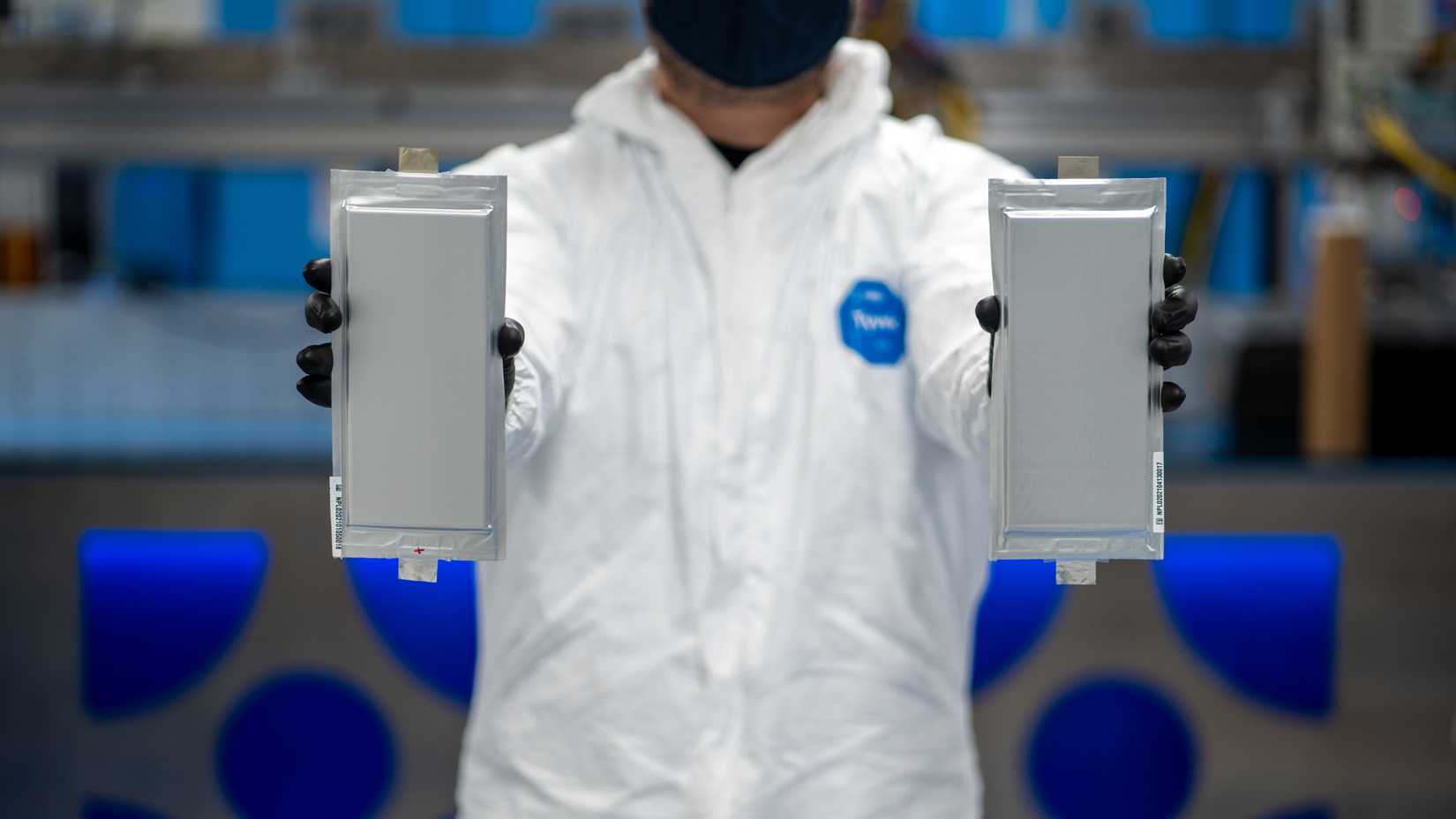
Solid-state batteries have many other advantages over lithium-ion. The biggest one is that fast-charging doesn’t wear them down. Slow charging times is another reason many people haven’t switched to EVs.
Although many current EVs have fast-charging capability, the batteries themselves last longer if the car owner never fast-charges them. Solid-state batteries, on the other hand, have already proven relatively resilient to fast-charging. It’s true that laboratory tests don’t reflect real life. Nevertheless, massive surges of incoming electricity don’t wear them down as severely as other types of batteries.
Extreme temperatures (both hot and cold) don’t threaten solid-state batteries. Lithium-ion batteries can lose their charge in severe cold, and be utterly ruined by peak summer heat. Of course, solid-state batteries definitely have their temperature “happy range” like all other batteries. However, severe weather wouldn’t inconvenience EV drivers who have an SSB.
If solid-state batteries seemed pointless, Toyota would not invest in them. After all, it has reached its current success without putting a single SSB on a dealer lot. However, it is clear that solid-state batteries are at the center of Toyota’s EV future.